

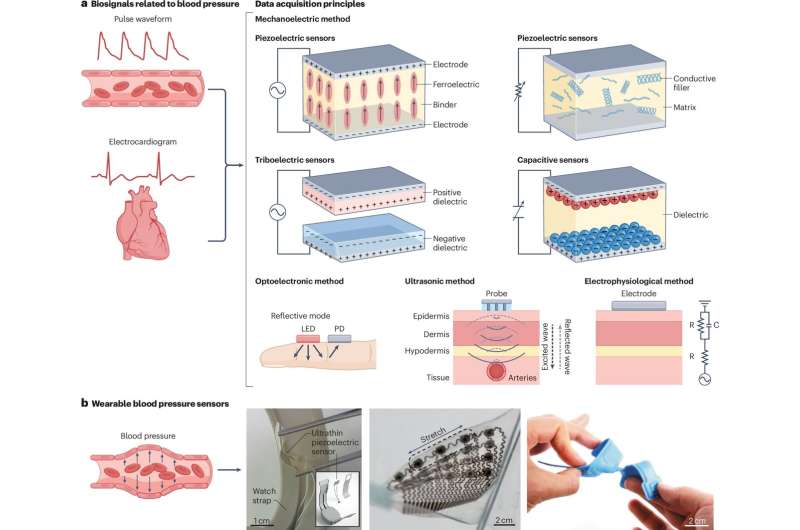
A KAIST research team lead by Professor Keon Jae Lee has suggested a novel theoretical framework. And research techniques for AI-powered wearable blood pressure monitors, paving the door for continuous and non-invasive cardiovascular monitoring.
Hypertension is a leading chronic disease that affects over 1 billion people globally and is a significant risk factor for serious cardiovascular disorders such as myocardial infarction, stroke, and heart failure. Traditional blood pressure measurement uses intermittent, cuff-based methods that fail to capture real-time changes and pose issues in continuous patient monitoring.
Wearable blood pressure sensors provide a non-invasive alternative for continuous pressure monitoring, allowing for real-time tracking and tailored cardiovascular health management. However, present technologies lack the accuracy and dependability required for medical applications, limiting their usefulness. To meet these problems, advances in high-sensitivity sensor technologies and AI signal processing algorithms are required.
Building on their previous study in Advanced Materials, which validated the clinical feasibility of flexible piezoelectric blood pressure sensors, Professor Lee’s team conducted an in-depth review of the most recent advances in cuffless wearable sensors, focusing on key technical and clinical challenges. Their review focuses on clinical elements of clinical application, including real-time data transfer, signal quality degradation, and AI algorithm accuracy.
Professor Keon Jae Lee said:
This paper systematically demonstrates the feasibility of medical-grade wearable blood pressure sensors, overcoming what was previously considered an insurmountable challenge. We propose theoretical strategies to address technical barriers, opening new possibilities for future innovations in this field. With continued advancements, we expect these sensors to gain trust and be commercialized soon, significantly improving quality of life.”