
In rare cases, bladder stones can grow unusually large and complex
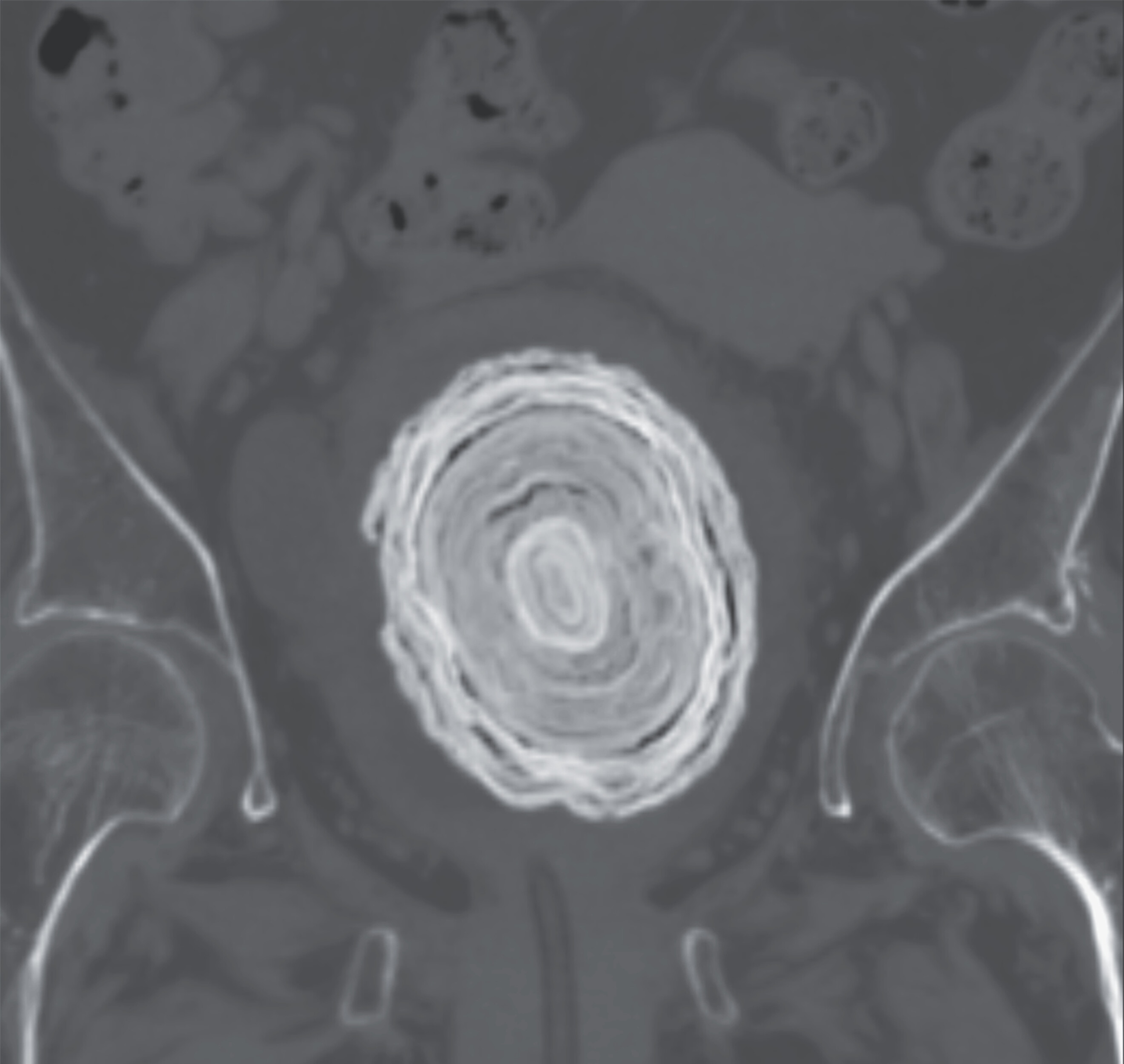
Bladder stones are usually thought of as small, irregular masses that form when urine becomes concentrated and minerals crystallize inside the urinary tract. However, in rare cases, they can grow into unusually large and complex structures that reflect long-term changes within the bladder environment. One striking example is the “tree ring–like” bladder stone seen on imaging in a 72-year-old woman with a 30-year history of paraplegia.
This case highlights how chronic medical conditions that affect bladder emptying can create the perfect conditions for stone formation over many years. It also illustrates how modern imaging, particularly computed tomography (CT), can reveal not only the presence of a stone but also its internal structure and growth history.
The patient in this case had paraplegia for three decades, meaning she had long-term loss of movement and sensation in her lower limbs, often due to spinal cord injury or neurological disease. In individuals with paraplegia, normal bladder control is frequently disrupted. This condition is known as neurogenic bladder, where the nerves that regulate bladder filling and emptying no longer function properly. As a result, urine may remain in the bladder for prolonged periods, and complete emptying becomes difficult or impossible.
When urine is retained, it becomes stagnant
Over time, this stagnant urine creates an environment where minerals such as calcium, magnesium, ammonium, and phosphate can crystallize. According to urological literature, urinary stasis combined with recurrent urinary tract infections is one of the strongest risk factors for bladder stone formation. Bacteria such as Proteus mirabilis can further contribute by producing enzymes that raise urine pH, making crystal formation even more likely.
In this patient, decades of impaired bladder emptying likely allowed repeated cycles of crystal deposition. The result was not a small stone, but a large bladder calculus that gradually grew layer by layer, much like the rings seen in a tree trunk. Each layer represents a period of mineral deposition, possibly influenced by changes in hydration, infection episodes, catheter use, or urinary chemistry over time.
This layered structure was clearly visible on CT imaging of the abdomen. CT scans are highly sensitive for detecting urinary stones and are considered the gold standard in many clinical settings. Unlike plain X-rays or ultrasound, CT imaging can show fine internal details, including differences in density within a stone. In this case, the stone displayed concentric rings, suggesting repeated episodes of growth rather than a single sudden formation.
Bladder stones are classified as either primary or secondary. Primary bladder stones form directly within the bladder, usually due to urinary stasis or infection. Secondary stones originate in the kidneys and travel down into the bladder. In patients with neurogenic bladder, primary stones are more common because the underlying problem is poor bladder emptying rather than kidney stone migration.
Symptoms of bladder stones can vary widely
Some patients experience pain in the lower abdomen, difficulty urinating, blood in the urine, or recurrent urinary tract infections. However, in individuals with reduced sensation such as those with paraplegia, symptoms may be subtle or even absent. This can delay diagnosis until the stone becomes very large or is discovered incidentally during imaging for another reason, as in this case.
The “tree ring” appearance of the stone is not just a radiological curiosity—it reflects the chronic and progressive nature of the disease process. Similar layered patterns have been described in other long-standing calculi in the urinary system. These patterns help clinicians understand that stone formation is often not a single event but a prolonged biological process influenced by multiple factors over time.
Management of large bladder stones typically requires surgical removal. Treatment options may include cystolitholapaxy, where the stone is broken into smaller pieces using laser or ultrasonic energy and then removed through the urethra. In cases where stones are extremely large or complex, open surgical removal may be necessary. After removal, it is essential to address the underlying cause to prevent recurrence, especially in patients with neurogenic bladder.
Long-term prevention strategies often involve improving bladder drainage. This may include intermittent catheterization, indwelling catheters, medications to manage bladder spasticity, or in some cases, surgical interventions. Regular follow-up is crucial, as patients with neurogenic bladder remain at high risk for recurrent stones and urinary infections.
According to urology references such as the American Urological Association (AUA) and peer-reviewed studies in journals like European Urology and The Journal of Urology, chronic urinary retention and infection remain the leading drivers of bladder stone formation worldwide. Neurogenic bladder patients represent a particularly vulnerable group due to their long-term need for assisted bladder emptying.
In conclusion, this case of a large bladder stone with a tree ring–like appearance in a woman with long-standing paraplegia illustrates the slow and silent nature of stone formation in the urinary system. It emphasizes the importance of regular monitoring in patients with neurogenic bladder and highlights how imaging can reveal the hidden history of disease progression. Most importantly, it shows that even conditions developing over decades can often be effectively treated once identified, improving patient comfort and reducing the risk of future complications.
Source: NEJM