
Case of a rare autoimmune disease – livedo racemosa
A seemingly harmless skin rash can sometimes reveal a far more serious underlying illness. This was demonstrated in the case of a 66-year-old woman with metastatic breast cancer who developed an unusual netlike rash on her leg. Although the rash itself caused no pain or discomfort, it ultimately pointed to a dangerous complication involving tumor cells blocking blood vessels in the skin. The case highlights the importance of recognizing subtle skin changes and understanding how cancer can affect the body in unexpected ways.
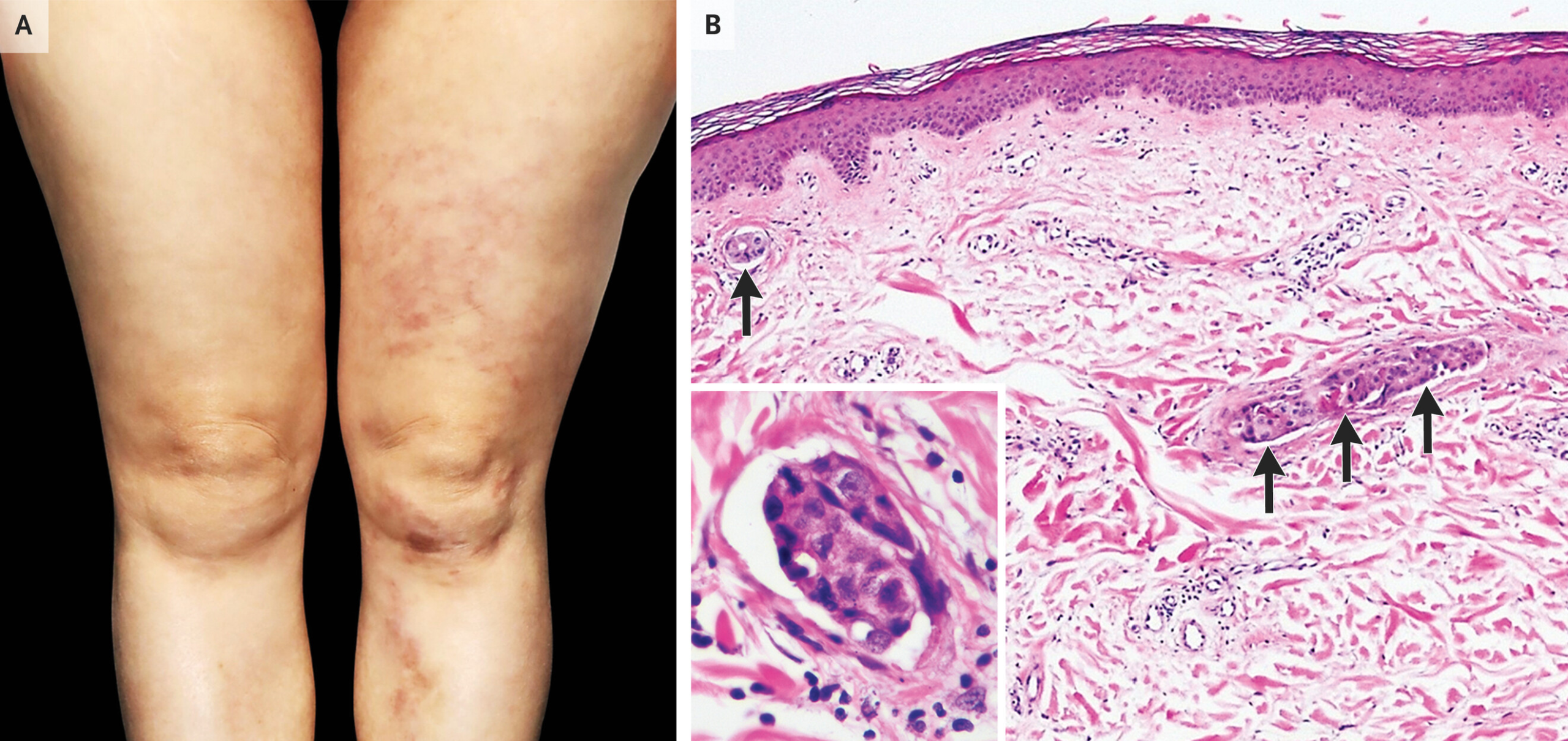
The woman visited a dermatology clinic after noticing a lacy, irregular rash on her left thigh that had been present for about a month. Unlike some common skin conditions, the discoloration did not worsen with cold weather or improve with warmth. Her medical history revealed metastatic breast cancer, meaning the cancer had spread beyond the breast to other parts of the body. Importantly, her cancer treatment had been interrupted during the COVID-19 pandemic, a period when many patients around the world experienced delays in medical care.
On physical examination, doctors observed a broken, netlike pattern of mottling extending from her thigh to her lower leg. This pattern was identified as livedo racemosa, a skin finding associated with disrupted blood flow. Livedo racemosa appears as an irregular, branching network of reddish or bluish discoloration on the skin. It differs from a more common condition known as livedo reticularis, which often produces a more symmetrical and uniform pattern and may occur temporarily in response to cold temperatures.
To better understand the cause of the rash, physicians performed several tests for autoimmune diseases, blood-clotting disorders, and thrombophilia, all of which came back negative. Because the appearance remained suspicious, a skin biopsy was performed. The biopsy provided the crucial answer: large abnormal cells were found inside the blood vessels of the skin. These cells tested positive for cytokeratin 7 and GATA-binding protein 3, markers commonly associated with breast cancer cells. Essentially, cancer cells from the patient’s metastatic breast cancer had entered and blocked the small blood vessels in the skin, creating what is known as tumor embolism.
Tumor embolism occurs when clusters of cancer cells travel through the bloodstream and lodge within blood vessels
In this case, the blockage interfered with circulation to the skin, producing the characteristic lacy discoloration. Although tumor emboli are more commonly associated with organs such as the lungs, they can occasionally appear in the skin and create visible clues that may help physicians identify disease progression.
The diagnosis of livedo racemosa due to tumor embolism is extremely rare but medically significant. Dermatologists and oncologists recognize that the skin can sometimes act as a “window” into internal disease. Certain rashes, nodules, or vascular patterns may indicate infections, autoimmune conditions, or hidden cancers. In patients with known malignancies, unusual skin findings should always prompt careful evaluation.
One important aspect of the rare autoimmune disease: livedo racemosa
One important aspect of this case is the distinction between livedo racemosa and livedo reticularis. Although the two names sound similar, they represent different clinical patterns. Livedo reticularis is often benign and temporary. It may occur when exposure to cold causes blood vessels near the surface of the skin to constrict, creating a faint bluish netlike pattern. In contrast, livedo racemosa is more irregular, persistent, and concerning. It is frequently linked to underlying diseases such as vasculitis, antiphospholipid syndrome, blood vessel obstruction, or malignancy.
The mechanism behind livedo racemosa involves impaired blood flow through medium-sized or small arteries in the skin. When circulation becomes disrupted, areas of reduced oxygen supply develop, leading to the characteristic mottled appearance. In this patient’s case, tumor cells physically blocked the vessels, preventing normal blood circulation. Similar vascular obstruction can also occur with blood clots, cholesterol emboli, or inflammatory diseases affecting blood vessels.
This case also reflects the broader healthcare challenges created during the COVID-19 pandemic. Many patients with chronic illnesses experienced interruptions in treatment because of lockdowns, overwhelmed healthcare systems, or fear of exposure to infection. For cancer patients, delayed chemotherapy or postponed follow-up appointments sometimes allowed disease progression. While it is impossible to know whether uninterrupted therapy would have changed the outcome in this case, the interruption highlights the vulnerability of patients with advanced cancer during public health crises.
After the diagnosis was confirmed, chemotherapy was resumed in an attempt to control the metastatic disease. Unfortunately, despite treatment, the patient died from respiratory failure seven months later. Advanced metastatic breast cancer can spread aggressively and affect multiple organ systems, including the lungs, liver, bones, and brain. The appearance of tumor emboli in the skin suggested widespread disease activity and poor prognosis.
Breast cancer remains one of the most common cancers worldwide. Advances in screening, targeted therapies, hormonal treatments, and chemotherapy have significantly improved survival rates over recent decades. However, metastatic breast cancer is still considered incurable in most cases, with treatment focused on prolonging life, relieving symptoms, and maintaining quality of life. Recognizing unusual manifestations of metastatic disease can help physicians make timely decisions about treatment and supportive care.
The case of livedo racemosa caused by tumor embolism serves as an important reminder that skin findings should never be ignored, especially in patients with serious underlying illnesses. Even asymptomatic rashes may reveal critical information about circulation, immune function, or cancer progression. For clinicians, maintaining a broad differential diagnosis is essential when evaluating persistent or unusual skin changes.
Ultimately, this case demonstrates the complex relationship between cancer and the vascular system. It also underscores the value of careful clinical observation, skin biopsy, and interdisciplinary collaboration in diagnosing rare medical conditions. Sometimes, the skin provides the first visible sign that a deeper process is occurring within the body, making dermatologic examination an important part of comprehensive medical care.
Source: NEJM