
Rapidly advancing infrared technology may one day allow you to avoid an invasive medical treatment in favor of delivering lab results to the doctor simply uploading a screenshot from your phone.
Unil Perera, Regents’ Professor of Physics, believes that this is the future of individualized medicine and disease diagnoses thanks to pioneering research.
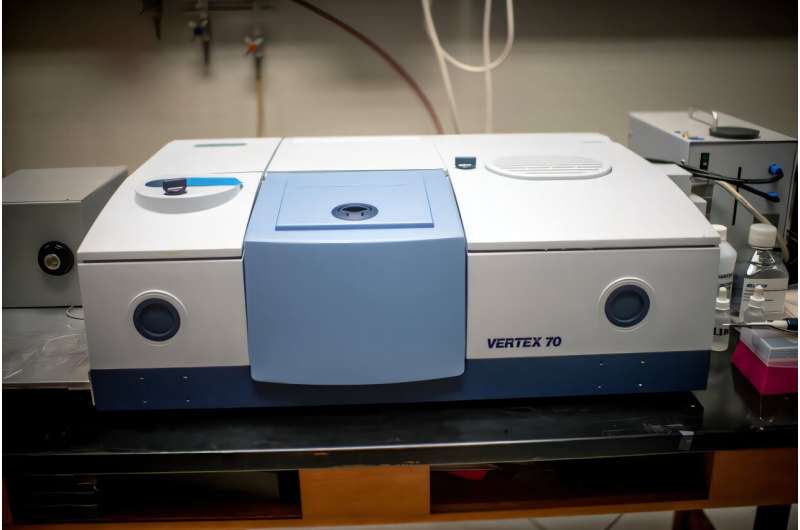
Perera believes that breakthrough technology known as ATR-FTIR spectroscopy—short for attenuated total reflectance-Fourier transform infrared—is helping to make non-invasive, accessible medical diagnostics a reality. similarly, it is a technique for studying the molecular composition of materials. That employs infrared light to show small details that are often concealed from view. Diseases such as melanoma can be discovered early using an infrared scan.
Perera’s research methods have already demonstrated the ability to improve diagnostics for a variety of illnesses. Indeed his work has resulted in patents for the detection of melanoma, lymphoma, colitis, and other types of cell activity.
Perera explains:
“The beauty of ATR-FTIR spectroscopy lies in its ability to provide detailed molecular data and identify disease progression without
needing invasive procedures,”
With this method, he believes that breakthroughs could transform how we identify everything from the common cold to colon cancer.
The next stage is to trace disease progression. His most recent research focuses on precisely measuring how an illness progresses over the course of a day. And developing benchmarks that can then be used in real-world therapeutic settings. This type of diagnostic could potentially provide therapeutic efficacy of a specific medicine. In fact, allows the physician to respond as promptly as possible.