
A 32-year-old woman presented to the emergency department with sudden-onset, severe chest pain. The pain was described as intense, central, and persistent, raising immediate concern for an acute coronary syndrome. An electrocardiogram (ECG) was performed promptly and demonstrated ST-segment elevations, confirming an acute myocardial infarction pattern. Given her young age and lack of typical cardiovascular risk factors, the presentation prompted urgent coronary angiography to identify the underlying cause.
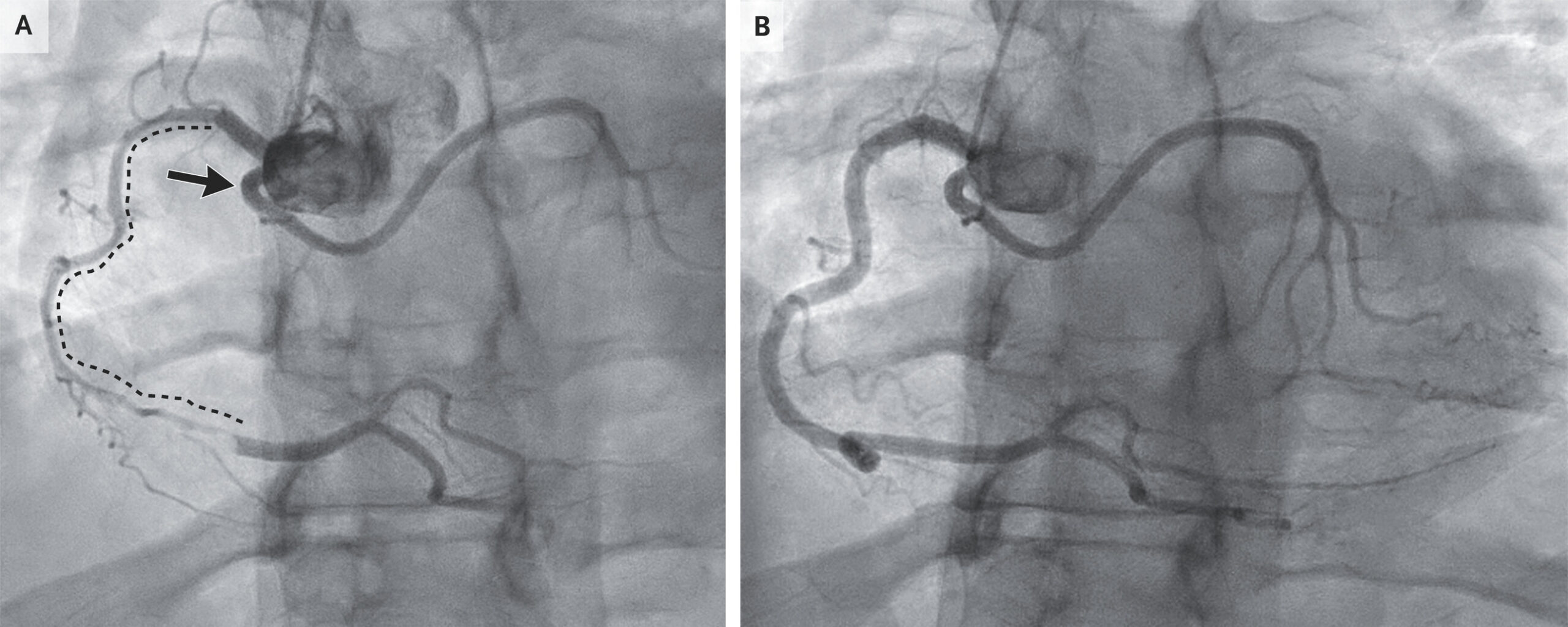
Coronary angiography revealed a striking finding: an abrupt change in caliber of the right coronary artery, without evidence of typical atherosclerotic plaque rupture or calcified stenosis. This appearance is highly suggestive of spontaneous coronary artery dissection (SCAD), a rare but increasingly recognized cause of acute myocardial infarction, particularly in young and otherwise healthy women.
Spontaneous coronary artery dissection occurs when a tear develops within the layers of the coronary artery wall. This allows blood to enter the vessel wall, creating a false lumen or intramural hematoma. As blood accumulates, it compresses the true lumen of the artery, reducing or completely blocking blood flow to the myocardium. The result is myocardial ischemia and, in many cases, full-thickness infarction.
Unlike classic atherosclerotic coronary artery disease, SCAD is not primarily driven by cholesterol plaque buildup. Instead, it is a structural failure of the arterial wall. According to major cardiovascular references, including the American Heart Association (AHA) scientific statements, SCAD accounts for a significant proportion of myocardial infarctions in women under 50 years of age and is one of the leading causes of pregnancy-associated myocardial infarction.
The abrupt caliber change seen on angiography reflects the transition between normal artery and the compressed segment caused by intramural hematoma or dissection flap. In many cases, there is no visible atherosclerotic plaque or thrombus, which helps distinguish SCAD from typical coronary artery disease. The right coronary artery, left anterior descending artery, and obtuse marginal branches are commonly affected.
The clinical presentation of SCAD is often indistinguishable from other causes of acute coronary syndrome. Patients typically experience sudden chest pain, which may radiate to the arm, neck, or jaw. ECG findings often show ST-segment elevation or depression depending on the extent and location of ischemia. Cardiac biomarkers such as troponin are usually elevated, confirming myocardial injury.
SCAD is strongly associated with specific patient populations and predisposing conditions. It most commonly affects young to middle-aged women, often without traditional cardiovascular risk factors such as diabetes, hyperlipidemia, or smoking. Several associated conditions have been identified, including fibromuscular dysplasia (FMD), connective tissue disorders such as Ehlers-Danlos syndrome, and hormonal influences such as pregnancy and the postpartum period. Emotional stress, intense physical exertion, and severe hypertension have also been reported as potential triggers.
The pathophysiology of SCAD is still being actively studied, but two main mechanisms are proposed. The first involves an intimal tear that allows blood to enter the vessel wall. The second involves spontaneous hemorrhage from the vasa vasorum within the arterial wall, leading to formation of an intramural hematoma without an obvious tear. Both mechanisms ultimately result in compression of the true lumen and reduced coronary blood flow.
Coronary angiography remains the primary diagnostic tool for SCAD, although its appearance can sometimes be subtle or misinterpreted as atherosclerosis or vasospasm. In certain cases, intravascular imaging such as optical coherence tomography (OCT) or intravascular ultrasound (IVUS) is used to confirm the diagnosis and better characterize the arterial wall pathology. The angiographic hallmark, as seen in this patient, is a long, smooth, or abrupt narrowing of the vessel without typical plaque irregularity.
Management of SCAD differs significantly from that of traditional myocardial infarction. In many stable patients, a conservative approach is preferred because the dissected artery often heals spontaneously over time. Medical therapy typically includes antiplatelet agents such as aspirin, beta-blockers to reduce arterial wall stress, and careful monitoring. Thrombolytic therapy is generally avoided because it may worsen bleeding within the vessel wall. Percutaneous coronary intervention (PCI) is reserved for patients with ongoing ischemia, hemodynamic instability, or high-risk anatomy, as it can be technically challenging and associated with complications in SCAD.
Long-term prognosis for SCAD is generally favorable, with most patients experiencing arterial healing over weeks to months. However, recurrence can occur, and long-term follow-up is essential. Patients are often advised to avoid extreme physical or emotional stressors and to undergo screening for associated vascular conditions such as fibromuscular dysplasia, which can affect other arterial beds.
This case highlights the importance of considering spontaneous coronary artery dissection in young women presenting with acute coronary syndrome, especially when angiography reveals atypical findings such as an abrupt caliber change without atherosclerosis. Early recognition is crucial because management strategies differ significantly from those used in conventional myocardial infarction, and inappropriate interventions may worsen outcomes.
In summary, the combination of ST-segment elevation myocardial infarction in a young woman and angiographic evidence of an abrupt coronary caliber change is highly suggestive of SCAD. This condition represents an important non-atherosclerotic cause of myocardial infarction and underscores the need for awareness among clinicians to ensure accurate diagnosis and appropriate, often conservative, management.
Source: NEJM