
An interdisciplinary research team at Dresden University of Technology (TUD), Rostock University Medical Center (UMR), and Dresden University Hospital created a unique, implantable, and fully absorbable sensor film. For the first time, it allows for reliable early diagnosis of circulation abnormalities in intestinal anastomoses. One of the most dangerous surgical procedures in the abdominal cavity. The findings have now been published in the journal Advance Science.
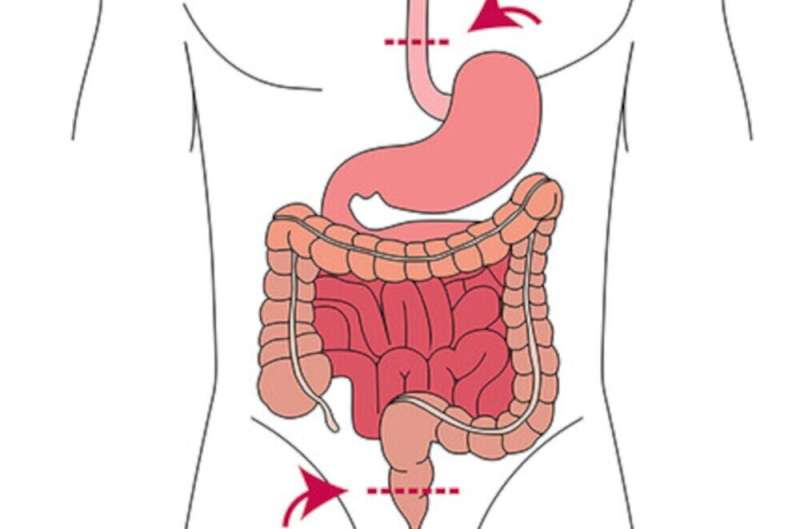
Intestinal anastomoses, which are surgical connections between two sections of the intestine after diseased tissue is removed. It is associated with a high risk of post-operative problems. Circulatory problems and immunological reactions, in particular, can have severe consequences or even death in a short amount of time. However, direct monitoring of the suture site has not been possible until recently. That frequently includes associated dangers for patients as well as significant expenses owing to follow-up procedures and extended hospital stays.
The Else Kröner Fresenius Center (EKFZ) for Digital Health at TUD and Dresden University Hospital convened leading experts from Dresden and Rostock to address this specific medical need.
Bioresorbable Sensor
Their novel approach has the potential to detect difficulties at an early stage and to avoid further damage. The interdisciplinary research team created a bioresorbable sensor film that may be put directly into the intestinal suture during surgery. It continually measures factors like as tissue impedance and temperature, delivering real-time information about the healing region for the first time.
Researchers at TU Dresden’s Dresden Integrated Center for Applied Physics and Photonic Materials (IAPP) created special printable electronic materials and manufacturing processes for this purpose. While the UMR team successfully implanted the device using established surgical procedures. The scientists demonstrated through statistical analysis of several sensors that rapid changes in electrical tissue resistance can clearly detect circulatory problems.
Prof. Karl Leo, project manager at TU Dresden said:
We had to break new ground in the selection of biocompatible materials and the manufacture of our printed electronics—with the aim of not impairing wound healing,” At the same time, the challenge was to be able to test the sensor film not only in the laboratory, but directly in the body.”
Further stages are already planned for the next years: the study will be conducted on a larger statistical basis. And the sensor film will be supplemented with additional functionalities. To acquire a deeper knowledge of the causes underlying anastomotic failure. The researchers regard this as a significant step toward smarter implants and safer surgical procedures.