
A new breakthrough in medical imaging could soon change the way we monitor our health. Researchers have developed a wearable ultrasound patch capable of producing images so detailed that users can observe their own internal organs in real time. Unlike traditional ultrasound systems that require bulky machines and trained technicians, this device is compact, lightweight, and designed to stick directly onto the skin like a bandage.
The innovation was highlighted by IFLScience and originates from a research team at the Massachusetts Institute of Technology (MIT). Their goal was to create a device that combines the imaging power of hospital-grade ultrasound equipment with the comfort and convenience of wearable technology.
How The Patch Works
Traditional ultrasound machines use handheld probes that must be manually positioned and adjusted during scanning. They require gel to improve sound wave transmission and must be operated by trained professionals to obtain accurate images. While effective, these systems are not designed for continuous monitoring or everyday use.
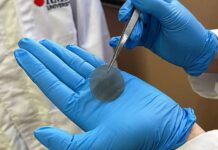
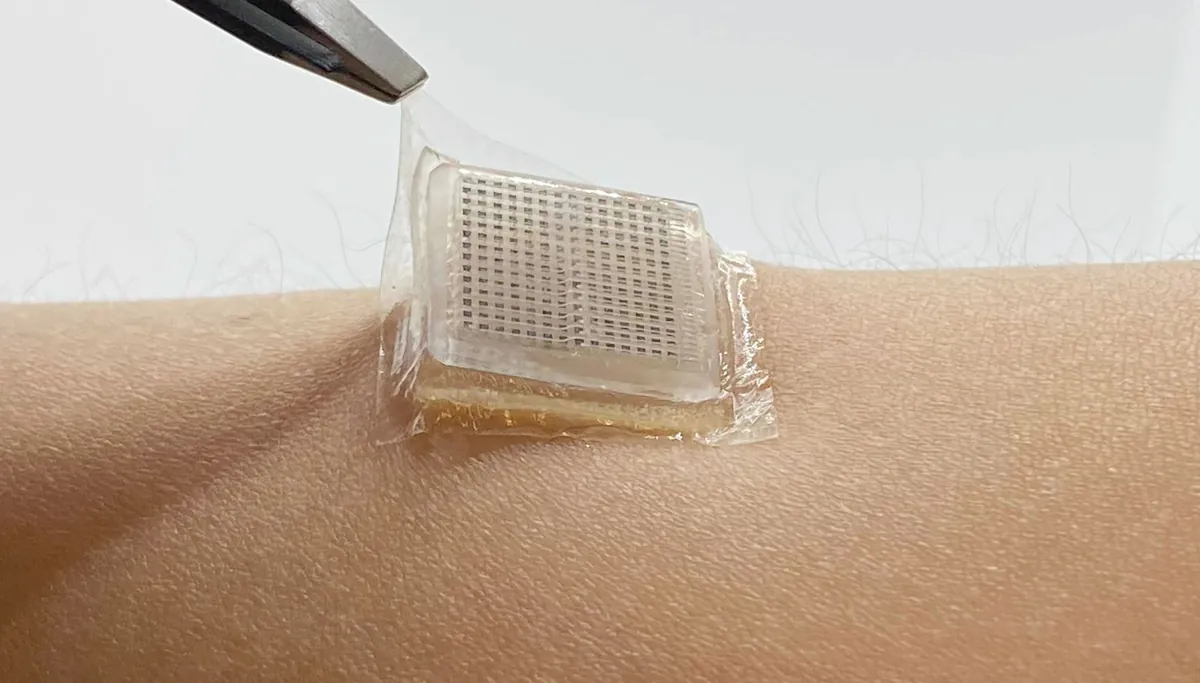
The new wearable ultrasound patch takes a different approach. Roughly the size of a postage stamp, the device adheres to the skin using a soft, flexible bioadhesive layer. Beneath this adhesive sits a rigid array of ultrasound transducers—the components responsible for emitting high-frequency sound waves and receiving their echoes.
One of the key engineering challenges the team overcame was maintaining image clarity while allowing the device to move with the body. Earlier attempts at wearable ultrasound technology struggled because flexible materials caused the imaging components to shift, distorting results. By combining a stable transducer array with a stretchy adhesive interface, the researchers created a system that maintains consistent contact with the skin while preserving high-resolution imaging.
When activated, the patch sends sound waves into the body. These waves bounce off internal structures such as blood vessels, muscles, and organs. The returning echoes are then translated into detailed images, similar to those produced by conventional ultrasound machines. However, unlike traditional systems, this patch can remain attached for extended periods, allowing continuous imaging.
What The Researchers Observed
During testing, volunteers wore the patch for up to 48 hours while performing various everyday activities. The results were impressive. The device produced clear images of major blood vessels, muscles in motion, and even deeper organs like the heart and lungs.
In one demonstration, researchers were able to observe changes in blood vessel diameter when participants shifted from sitting to standing. These subtle vascular changes are important indicators of how the body regulates blood pressure and circulation. In another example, the patch captured the stomach expanding and contracting after a person drank liquid, offering a detailed look at digestive motion.
The ability to continuously monitor internal organs without requiring hospital equipment opens the door to entirely new possibilities in medicine. Rather than capturing a single snapshot during a clinical appointment, doctors could analyze how organs function over hours or even days.
Why This Matters
Continuous imaging has significant potential in both preventative care and chronic disease management. For example, heart patients could benefit from ongoing monitoring of cardiac performance without repeated hospital visits. Individuals with circulatory issues might track vascular changes in real time. Athletes could observe muscle function and recovery during training.
In emergency or remote settings, wearable ultrasound devices could provide valuable diagnostic information when traditional equipment is unavailable. Rural communities or developing regions with limited access to medical imaging could especially benefit from such portable technology.
Beyond clinical applications, the technology could eventually move into consumer health monitoring. As wearable devices like smartwatches have already transformed how people track heart rate and sleep patterns, an ultrasound patch could represent the next step in personal health analytics.
Future Developments
Currently, the prototype is still connected to external imaging equipment. However, researchers envision future versions becoming fully wireless. The ultimate goal is to integrate the patch with smartphones or portable receivers, making real-time imaging accessible outside clinical environments.
Artificial intelligence may also play a role in the device’s evolution. Automated image analysis could help interpret ultrasound data, detect abnormalities, and alert users or healthcare providers if concerning patterns emerge. AI-assisted diagnostics would make the system more user-friendly and reduce reliance on specialist interpretation.
Further research will focus on improving durability, extending wear time, and ensuring long-term comfort. Commercialization will require regulatory approvals and large-scale testing, but the early results are promising.
A Glimpse Into The Future of Medicine
This wearable ultrasound patch represents a shift in how we think about diagnostic imaging. Instead of being confined to hospitals and clinics, medical imaging may become something that accompanies us throughout daily life. Just as blood glucose monitors transformed diabetes care and fitness trackers revolutionized wellness monitoring, wearable ultrasound could redefine internal health assessment.
For healthcare professionals—including those working in clinical settings like dental offices—this kind of innovation highlights how rapidly medical technology is advancing. Noninvasive monitoring tools may soon become more integrated into everyday healthcare practice, supporting early detection and preventative strategies across multiple specialties.
While widespread consumer use is still years away, the concept is powerful: a small adhesive patch capable of showing you your own heart beating, your stomach moving, or your blood vessels adjusting in real time. The boundary between clinical diagnostics and personal health tracking continues to blur.
In many ways, this development reflects a broader trend in medicine—making advanced healthcare tools smaller, smarter, and more accessible. If future iterations succeed in becoming wireless, AI-integrated, and affordable, wearable ultrasound patches could represent one of the most significant leaps in noninvasive medical imaging in decades.
The idea that you might one day observe your internal organs functioning through a simple wearable device no longer belongs to science fiction. It is steadily becoming reality.