
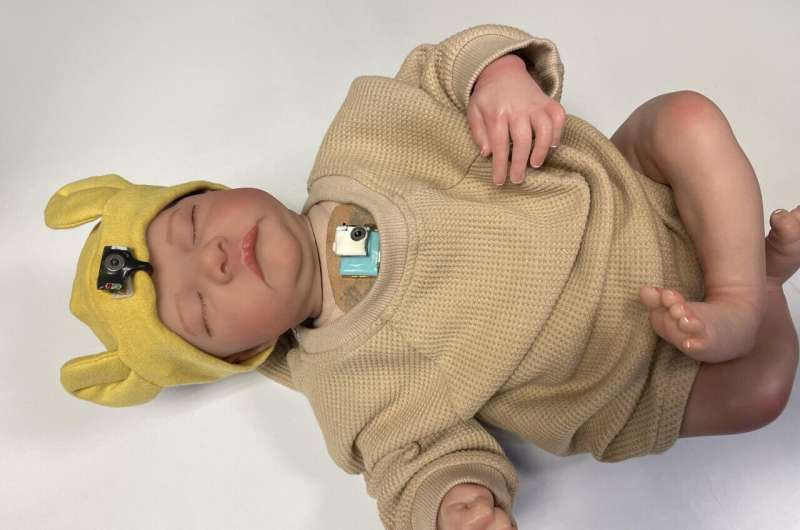
A new, soft, all-in-one wearable technology has provided continuous wireless monitoring of neonatal health in low-resource situations. Georgia Tech researchers used advanced packaging methods to create the system. It consists of a chest-mounted patch and a forehead-mounted pulse oximeter that sends real-time data to a smartphone app.
The wearable device monitors and records critical clinical indicators like heart rate, breathing rate, temperature, electrocardiograms, and blood oxygen saturation. A rapid diagnosis of aberrant readings in resource-constrained neonatal facilities could drastically lower newborn mortality rates.
The device’s pilot trial, published in npj Digital Medicine, showed a considerable improvement over current vital sign monitoring. And recording methods by offering continuous oversight with less medical equipment and minimizing handwritten paper tracking.
Vital signs are a collection of critical medical data that reflect the state of the body’s life-sustaining functions. The combination of this wearable technology and a smartphone app automated the monitoring procedure, resulting in a higher level of neonatal care than the present practices at Ethiopia’s top hospital.
Gleason said:
When we started this latest study, Ethiopian parents were reluctant to participate. But once we recruited a few mothers in the neonatal intensive care unit (NICU), everyone in the NICU community wanted their child to participate in our wearable health monitoring system.”
Child mortality rates in Ethiopia have declined over the last decade, but infant fatalities have stayed relatively stable. As their research progresses, Yeo and Gleason believe their innovative wearable neonatal technology has the potential to drastically reduce neonatal mortality in Ethiopia.
The study was carried out at Tikur Anbessa Specialized Hospital (TASH) in Addis Abeba, in collaboration with Abebaw Fekadu, Ph.D., of the Center for Innovative Drug Development and Therapeutic Trials for Africa (CDT Africa Inc.), and neonatologist Asrat Demtse, M.D., of the TASH department of pediatrics.