
Case Presentation
A 28-year-old woman from Ethiopia presented to the hospital because of a swelling in her left thigh that had been there for four months. She described a mild burning sensation in her thigh but was otherwise able to carry out her daily activities without difficulty. She had no history of fever, injury to the thigh, or any chronic illnesses. Growing up in a rural area, she had been around animals like sheep and dogs.
Initially, she sought treatment at a local health center, where she was given an unknown medication for a week, but this did not improve her condition. Upon examination, a doctor noticed a non-tender, soft lump about 10 centimeters by 12 centimeters on her inner thigh.
Investigations and Management
An initial ultrasound suggested an abscess, leading to a diagnosis of pyomyositis, and the doctor drained the area. However, the fluid extracted was not pus. Further ultrasound and MRI scans revealed characteristics consistent with hydatid cysts, which are fluid-filled sacs caused by parasitic worms.
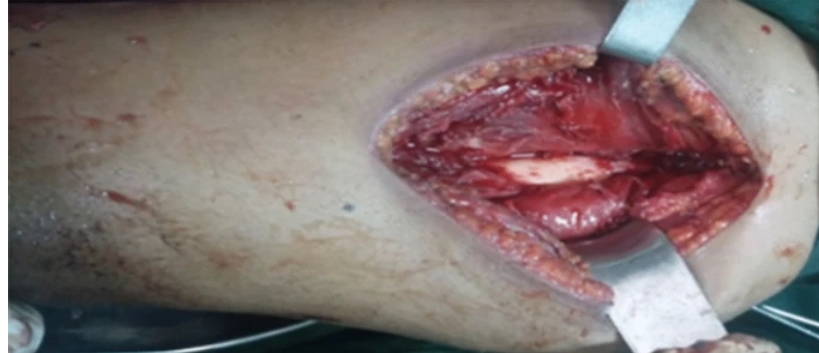
Given the diagnosis of a benign hydatid cyst, surgery was performed. The cyst was found to be attached to the vastus medialis and intermedius muscles. During the procedure, the cyst ruptured, releasing a cloudy fluid and some whitish, leaf-like material. The cyst, along with its outer shell, was removed and examined under a microscope, confirming it as an intramuscular hydatid cyst. After surgery, the patient received additional medication with albendazole and praziquantel for several weeks to kill any remaining parasites. One year after the surgery, the patient reported no further issues and was able to return to her normal activities.
Hydatid Disease
Cystic echinococcosis, also called hydatid disease or hydatidosis, is a parasitic illness that affects both animals and humans. It is primarily caused by the Echinococcus granulosus tapeworm, though the Echinococcus multilocularis tapeworm can also lead to this disease. The liver and lungs are the most common sites of infection, while involvement of the musculoskeletal system is extremely rare, occurring in only about 0.5–4% of cases.
The disease begins when the definitive host, usually a dog, ingests tapeworm eggs. Humans, acting as intermediate hosts, become infected accidentally. The eggs, which are resistant to stomach acid, hatch into embryos in the duodenum. These embryos penetrate the intestinal wall and enter the portal vein system, traveling to the liver. Most hydatid cysts form in the liver and lungs, but in rare instances, they develop in muscles. Commonly affected muscles include the biceps femoris, triceps, supraspinatus, diaphragm, psoas, sartorius, thigh, quadriceps femoris, and gracilis. Hydatid disease poses a significant public health challenge in developing countries, where it is often exacerbated by factors like illegal animal slaughter, a high population of stray dogs, and limited public awareness about the disease.
Among musculoskeletal cases, the thigh muscles are the most frequently affected, followed by the paravertebral region. Typically, the disease presents as a painless, slow-growing mass with normal skin covering the area. The primary treatments include total surgical removal of the cysts and fine-needle aspiration. In endemic regions, doctors should consider primary muscle hydatid cysts as a possible diagnosis for such presentations. Diagnosis is aided by serological tests and imaging techniques.
Prevalence & Diagnosis
This parasitic disease is widespread in many regions of the world, particularly in South America, the Middle East, parts of Africa, Australia, and the Mediterranean. Skeletal muscle hydatid cysts are often mistaken for other conditions, such as cancer or bacterial infections like pyomyositis, because their imaging features are nonspecific. Diagnosing these cysts before surgery is difficult due to their low prevalence and resemblance to other soft tissue masses. In many cases, the diagnosis is only confirmed during surgery or through histological analysis. However, certain signs can help differentiate hydatid cysts from other conditions. For example, calcification visible on CT scans or the presence of multiple primary cysts can distinguish hydatid cysts from malignancies, amoebic abscesses, bacterial abscesses, or hemangiomas. It is worth noting that hydatid serology often produces negative results, making diagnosis even more challenging.
Management
The primary treatment for skeletal muscular hydatidosis is surgery, but there is growing use of adjuvant chemotherapy, particularly with medications like albendazole. In one reported case, a patient with skeletal muscle hydatid disease underwent surgery followed by a combination of albendazole and praziquantel for postoperative treatment. The scarcity of documented cases in some regions has created a gap in knowledge about the disease’s clinical presentation, diagnosis, and management. This particular case study aims to raise clinical suspicion and provide guidance for handling skeletal muscle hydatid disease.
Conclusion: Hydatid Disease
Hydatid disease, caused by parasitic tapeworms, usually affects the liver and lungs. However, it can also develop in muscles, though this is uncommon. Muscle cysts are often mistaken for other conditions like cancer or infections, making diagnosis difficult. Even in areas where this disease is more common, it’s important to consider it as a possible cause for any unexplained muscle masses. Treatment typically involves surgery to remove the cyst, sometimes combined with medication to kill the remaining parasites.