

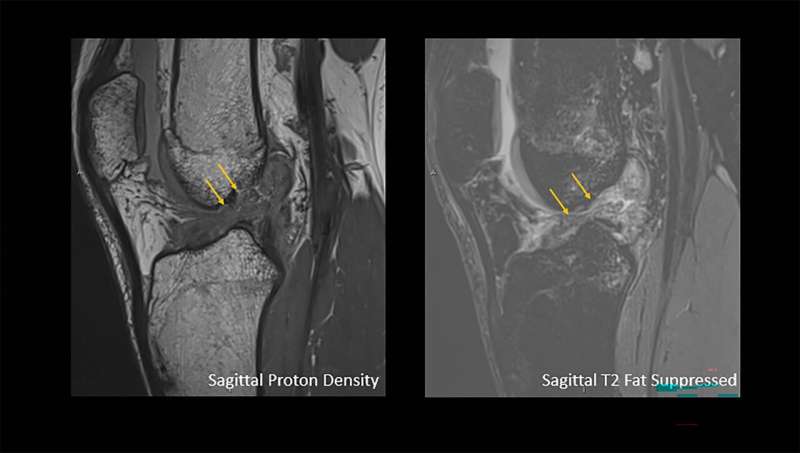
A recent MRI-based study has identified important differences in knee injury patterns between men and women, offering new insight into how knee pain presents across genders and age groups. The research analyzed over 13,500 knee MRI scans taken from patients who sought medical care primarily for knee pain at outpatient clinics affiliated with a major medical center between 2019 and 2024.
The study focused on common knee injuries, including tears of the anterior cruciate ligament (ACL), meniscus, and medial collateral ligament (MCL). While previous research—often centered on athletic populations—has suggested that women are at higher risk for ACL injuries, this broader MRI analysis revealed a different trend. Across all age categories, men were found to have a higher prevalence of ACL tears, with the greatest difference observed in individuals between the ages of 20 and 40.
Men under the age of 40 also showed higher rates of meniscal and MCL tears compared to women in the same age group. However, this pattern shifted later in life. Among older adults, women were more likely than men to show meniscal and ligament damage, which researchers believe may be related to age-related joint degeneration, hormonal changes, or biomechanical differences over time.
These findings emphasize the value of using real-world imaging data rather than relying solely on sports-injury studies, which may not reflect the broader population. Understanding how knee injuries differ by gender and age can help clinicians improve diagnostic accuracy and develop more personalized treatment and prevention strategies.
The researchers note that knee health should be a priority for both men and women. Strength training, injury prevention programs, and early evaluation of knee pain may help reduce long-term joint damage. Overall, the study highlights the need for individualized approaches to knee care based on patient characteristics rather than assumptions alone.