
Understanding Exogenous Lipoid Pneumonia: A Rare but Serious Lung Condition
Exogenous lipoid pneumonia is a rare form of lung disease caused by the inhalation or aspiration of oily substances into the lungs. Although uncommon, the condition can lead to chronic inflammation, breathing difficulties, and long-term lung damage if not recognized early. Because its symptoms often resemble more common respiratory illnesses such as bacterial pneumonia or chronic bronchitis, diagnosis may be delayed. Increased awareness among both healthcare providers and the public is important, especially as certain lifestyle practices and household products may increase the risk of developing the condition.
The term “exogenous” refers to something originating outside the body, while “lipoid” relates to fats or oils.
In exogenous lipoid pneumonia, fatty substances enter the airways and accumulate in the lungs. Unlike water-based materials, oils do not easily trigger the body’s cough reflex. As a result, they can silently reach deep parts of the lungs where they interfere with normal respiratory function and provoke inflammation.
Many different oily substances have been linked to exogenous lipoid pneumonia. Mineral oil is one of the most common causes and has historically been used as a laxative for constipation. People who accidentally aspirate small amounts repeatedly over time may gradually develop lung inflammation. Other reported causes include petroleum jelly, oil-based nasal drops, lip balms, certain herbal remedies, cooking oils, and even occupational exposure to industrial lubricants. In recent years, vaping products and oil-containing electronic cigarette liquids have also raised concern because some formulations contain lipid-based ingredients that may damage lung tissue.
The condition can affect people of all ages, but certain groups are at higher risk. Elderly individuals and young children are particularly vulnerable because they may have difficulty swallowing properly. Patients with neurological disorders such as stroke, Parkinson’s disease, or dementia may also be at increased risk because impaired swallowing can allow oily substances to enter the airways instead of the esophagus. Additionally, individuals with chronic acid reflux or structural abnormalities of the throat may be more likely to aspirate foreign materials into the lungs.
One of the challenges in diagnosing exogenous lipoid pneumonia is that symptoms can vary widely. Some patients experience a persistent cough, chest pain, shortness of breath, or wheezing. Others may develop fever and fatigue, causing the illness to resemble a typical lung infection. In mild cases, patients may have no symptoms at all, and the condition is discovered incidentally on imaging studies performed for another reason. Symptoms may develop gradually over weeks or months, especially when exposure occurs repeatedly in small amounts.
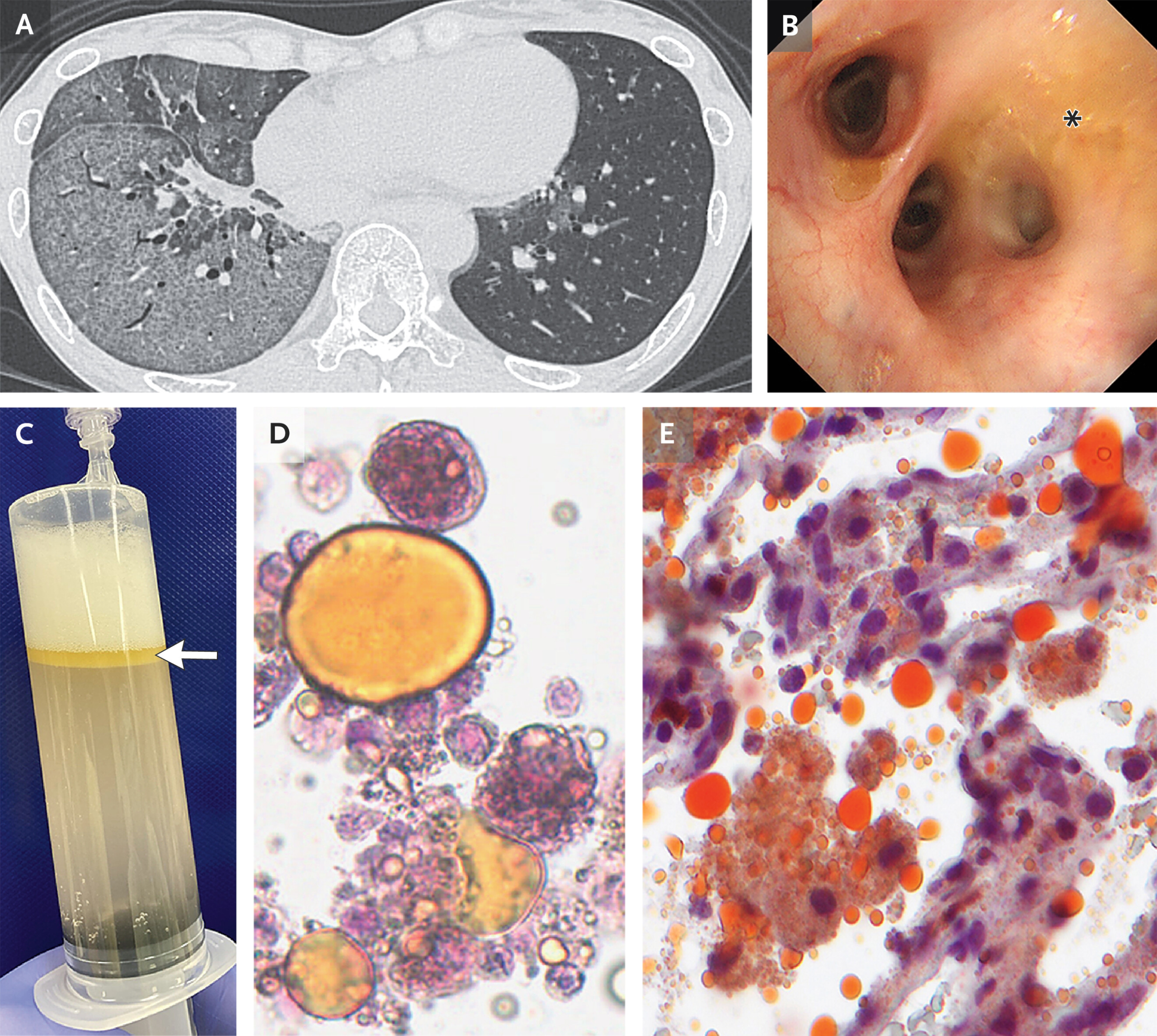
When physicians suspect exogenous lipoid pneumonia, imaging studies play an important role in evaluation.
Chest X-rays may show cloudy areas in the lungs, while computed tomography (CT) scans often reveal more detailed abnormalities. Certain imaging patterns, such as areas of low-density lung consolidation caused by fat accumulation, may raise suspicion for the disease. However, imaging findings alone are usually not enough to make a definitive diagnosis because many lung diseases can appear similar.
A detailed medical history is therefore essential. Doctors often ask patients about exposure to oil-based products, use of home remedies, occupational hazards, or swallowing difficulties. Sometimes patients do not initially recognize that a commonly used substance could be harmful to the lungs. For example, chronic use of mineral oil for constipation or frequent application of petroleum jelly inside the nose may seem harmless but can contribute to repeated aspiration over time.
Bronchoscopy may also be used to help confirm the diagnosis. During this procedure, a flexible camera is inserted into the airways to examine the lungs and collect samples. Microscopic analysis may reveal lipid-laden macrophages, which are immune cells filled with fat droplets. These findings support the diagnosis of lipoid pneumonia and help exclude infections or malignancy.
The inflammatory reaction caused by oils in the lungs can be significant. When fatty substances accumulate, the immune system attempts to remove them, triggering chronic inflammation and tissue injury. Over time, this process may lead to fibrosis, or scarring of the lung tissue, which can permanently impair breathing. In severe cases, patients may develop respiratory failure.
Treatment of exogenous lipoid pneumonia focuses primarily on stopping exposure to the offending substance. Identifying and eliminating the source of aspiration is the most important step. In some cases, symptoms improve significantly once the oily material is discontinued. Supportive care such as oxygen therapy may be necessary for patients with breathing difficulties.
Corticosteroids are sometimes used to reduce inflammation, although their effectiveness varies between patients. If secondary bacterial infection develops, antibiotics may also be prescribed. In severe or persistent cases, therapeutic bronchoalveolar lavage, a procedure used to wash out material from the lungs, has occasionally been attempted. However, treatment strategies are often individualized because the condition is relatively rare and large clinical trials are limited.
Prevention is especially important because many cases are avoidable. Healthcare professionals generally discourage the use of oil-based products in people at high risk of aspiration. Caregivers of elderly or neurologically impaired patients should be cautious with mineral oil laxatives and oil-containing remedies. Public awareness about the risks associated with inhaling or aspirating oily substances can help reduce preventable lung injury.
The rise of vaping has also drawn attention to lipid-related lung disease. Although vaping-associated lung injury is complex and may involve multiple mechanisms, some products containing vitamin E acetate and oil-based compounds have been implicated in severe lung inflammation. This has increased interest in understanding how inhaled lipids affect respiratory health.
Exogenous lipoid pneumonia may be rare, but it illustrates how substances considered harmless in one part of the body can become dangerous when they enter the lungs. Early recognition, careful history-taking, and prompt removal of the causative agent are essential for improving outcomes. The condition also serves as a reminder of the delicate nature of the respiratory system and the importance of using household and medicinal products safely.
As medicine continues to evolve, awareness of uncommon diseases like exogenous lipoid pneumonia remains crucial. Recognizing subtle symptoms and understanding environmental exposures can help physicians diagnose the condition earlier and prevent long-term complications.
Source: NEJM