
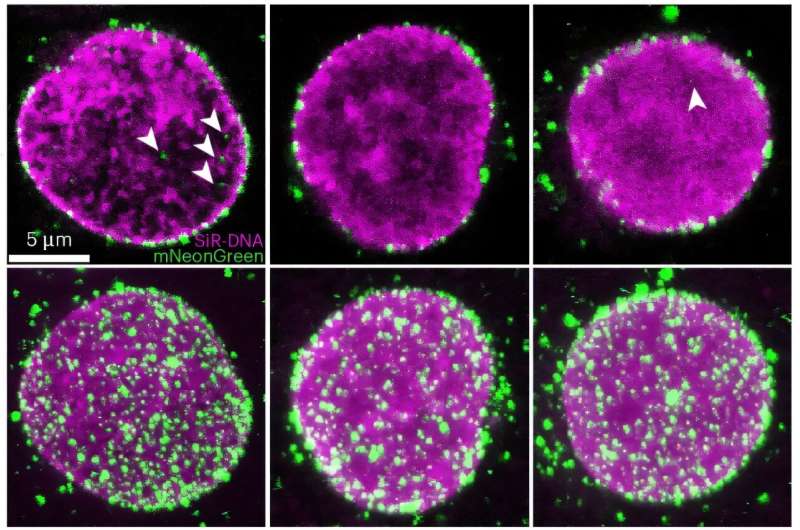
Scientists have captured highly detailed images of HIV-1 viral cores entering the nucleus of human cells, offering a major breakthrough in understanding how the virus infects the body. The study, conducted by researchers at the University of Oxford and supported by the UK’s Diamond Light Source imaging facility, used advanced cryo-electron microscopy to observe a stage of HIV infection that had previously been extremely difficult to visualize.
HIV-1, the most common form of the virus, relies on a protective shell called the viral core or capsid to transport its genetic material into a host cell. Once inside the cell, the virus must pass through the nuclear pore complex, a gateway that controls access to the cell’s nucleus. Scientists had long believed this gateway was relatively rigid, but the new research revealed that it is far more flexible and adaptable than previously thought.
Using specialized imaging methods, the team successfully captured nearly 1,500 viral cores during the process of nuclear entry. The findings showed that successful infection depends on both the flexibility of the HIV capsid and the ability of the nuclear pore to expand and change shape. Researchers also discovered that a host protein known as CPSF6 plays a key role in helping the virus move through the nuclear barrier. Viral cores that were too unstable or unable to interact with CPSF6 often became trapped outside the nucleus.
The study suggests that the nuclear pore acts as more than just a passive doorway—it actively influences which viral particles can enter the nucleus. Researchers believe these discoveries could lead to new antiviral therapies designed to block HIV at one of its most critical stages of infection. The work also highlights the growing power of in situ structural biology in revealing how viruses interact with human cells in real time.