
A man from upstate New York presented with a several-day history of fatigue, fever, decreased appetite, headache, and progressive yellowing of the eyes. On examination, he appeared ill and was noted to have scleral icterus, suggesting jaundice. Given the combination of systemic symptoms and jaundice, an infectious or hematologic process was strongly suspected, and laboratory evaluation was promptly initiated.
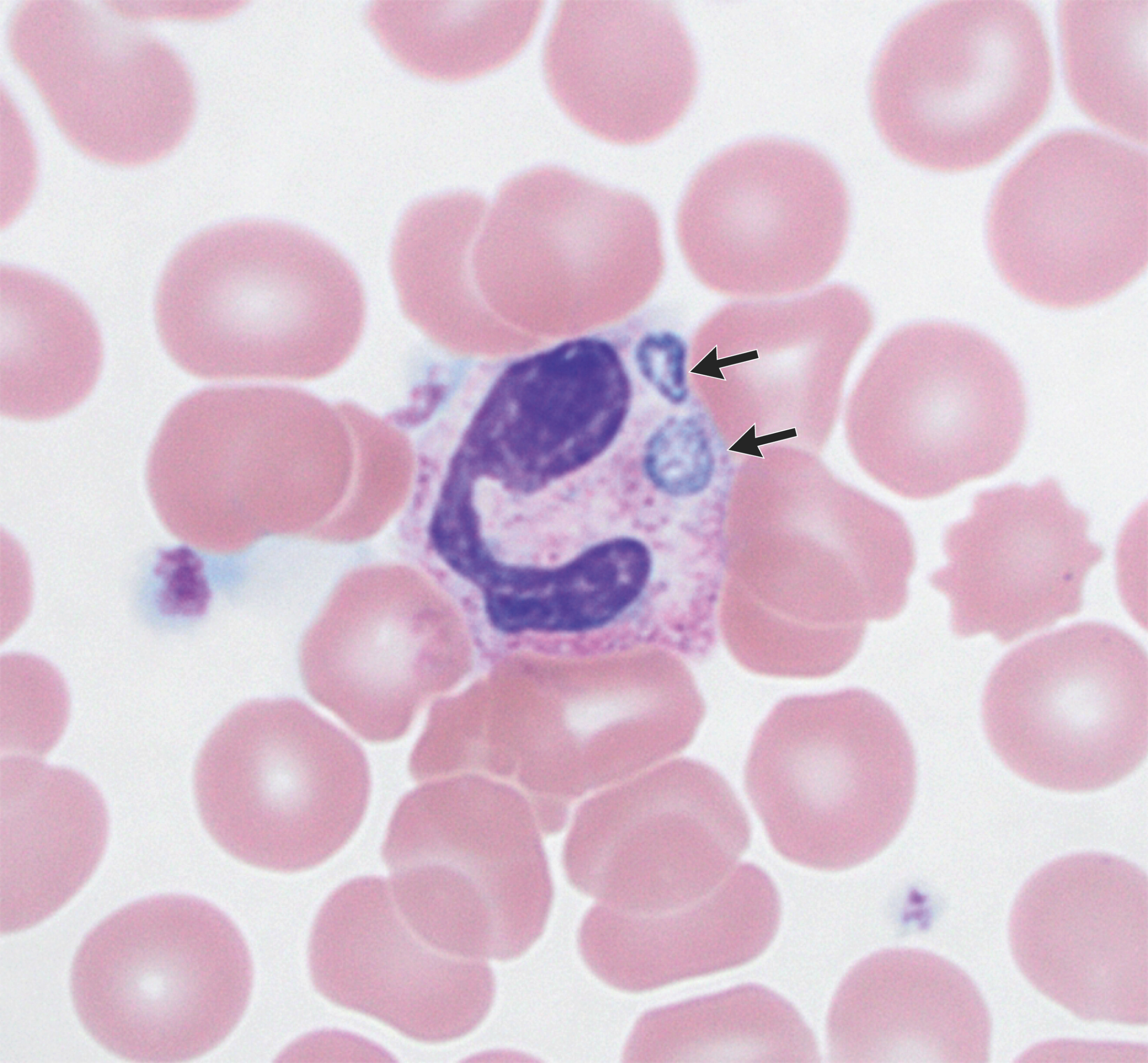
A peripheral-blood smear provided a crucial diagnostic clue. It demonstrated neutrophils at various stages of maturation, including band forms and segmented neutrophils, containing abnormal intracytoplasmic inclusions. These inclusions were consistent with morulae, which are clusters of bacteria within the cytoplasm of white blood cells. This finding is highly suggestive of human granulocytic anaplasmosis (HGA), an emerging tick-borne infectious disease caused by Anaplasma phagocytophilum.
Human granulocytic anaplasmosis is transmitted through the bite of infected Ixodes ticks, the same tick species responsible for Lyme disease and babesiosis. In the northeastern United States, including upstate New York, these infections are endemic due to the high prevalence of deer ticks. The seasonal pattern typically peaks in late spring and summer, corresponding to increased outdoor exposure and tick activity.
The causative organism, Anaplasma phagocytophilum, is an obligate intracellular bacterium that primarily infects neutrophils. Once inside the cell, it forms membrane-bound clusters known as morulae, which can be visualized on peripheral blood smear using light microscopy. These inclusions are a key diagnostic hallmark, although their sensitivity is limited and they may not always be present.
The patient’s symptoms reflect the systemic inflammatory response triggered by infection. Early manifestations of human granulocytic anaplasmosis are nonspecific and include fever, chills, myalgia, headache, and malaise. Gastrointestinal symptoms such as nausea or loss of appetite may also occur. In more severe cases, patients can develop leukopenia, thrombocytopenia, and elevated liver enzymes, which may contribute to jaundice, as seen in this case.
Jaundice in anaplasmosis is typically due to hepatic involvement rather than primary hemolysis. Hepatic inflammation and cholestasis can lead to elevated bilirubin levels, resulting in yellow discoloration of the sclera. The combination of systemic symptoms and laboratory abnormalities can mimic other serious conditions such as viral hepatitis, sepsis, or hemolytic disorders, making early recognition of the characteristic blood smear findings especially important.
The pathophysiology of human granulocytic anaplasmosis involves infection of neutrophils and disruption of normal immune function. Anaplasma phagocytophilum alters neutrophil signaling pathways, impairs oxidative burst activity, and allows bacterial survival within the host cell. This immune dysregulation contributes to the systemic inflammatory response and can increase susceptibility to secondary infections.
Diagnosis is often clinical in combination with epidemiologic exposure and laboratory findings. In addition to blood smear examination, polymerase chain reaction (PCR) testing is the most sensitive and specific diagnostic method. Serologic testing may also be used but often becomes positive later in the disease course. Given the potential for rapid progression, treatment is frequently initiated based on clinical suspicion before confirmatory results are available.
The treatment of choice for human granulocytic anaplasmosis is doxycycline, which is highly effective and should be started promptly in suspected cases. Early treatment typically results in rapid clinical improvement, often within 24 to 48 hours. Delayed therapy, however, can lead to severe complications, including respiratory failure, renal dysfunction, and, in rare cases, death. Unlike many other bacterial infections, doxycycline is recommended even in children and pregnant patients when anaplasmosis is suspected, due to the severity of untreated disease.
This case also highlights the importance of geographic and seasonal awareness in clinical diagnosis. Upstate New York is part of a well-recognized endemic region for Ixodes tick–borne diseases, including Lyme disease, babesiosis, and anaplasmosis. Co-infection is possible, and patients may present with overlapping clinical features. For this reason, clinicians often consider empiric therapy covering multiple tick-borne pathogens in appropriate clinical settings.
Differential diagnosis in this case would include viral infections such as Epstein–Barr virus or cytomegalovirus, bacterial sepsis, leptospirosis, and hemolytic processes. However, the presence of morulae within neutrophils is a distinguishing feature that strongly supports anaplasmosis and helps narrow the diagnosis significantly.
In summary, a man from an endemic region presenting with fever, fatigue, headache, anorexia, and jaundice was found to have intracytoplasmic inclusions in neutrophils on peripheral blood smear, consistent with morulae. These findings are characteristic of human granulocytic anaplasmosis, a tick-borne intracellular infection caused by Anaplasma phagocytophilum. Prompt recognition and early treatment with doxycycline are essential to ensure rapid recovery and prevent serious complications.
Source: NEJM