
A 32-year-old woman was brought to the hospital with a 3-year history of slowly progressive weakness affecting both her limbs and trunk. The weakness had begun subtly, with difficulty lifting objects and frequent tripping, but gradually worsened to the point where she required assistance with daily activities. Over time, she also noticed increasing fatigue and loss of muscle bulk. There was no history of sensory loss, pain, or bowel and bladder dysfunction.
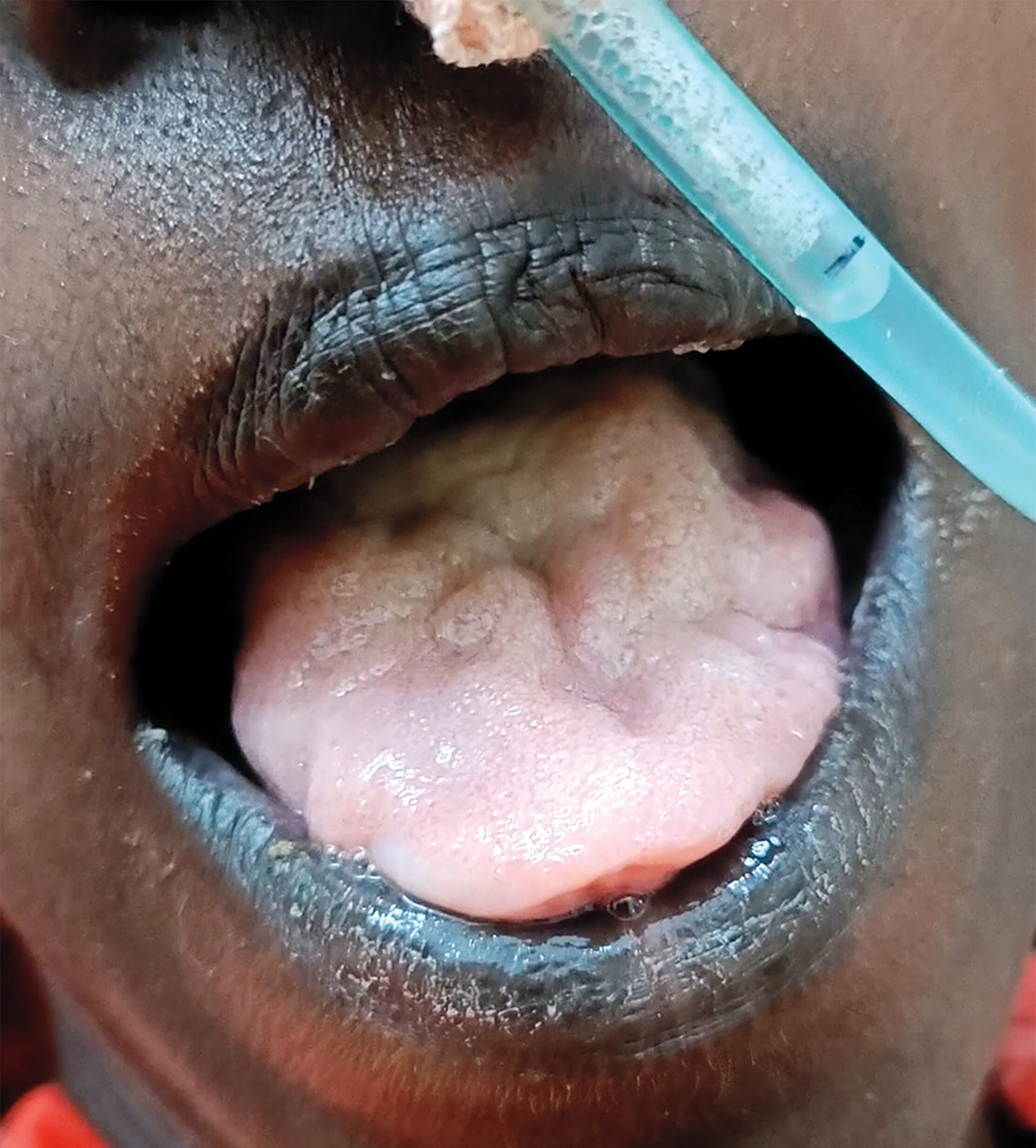
On neurological examination, the most striking finding was marked atrophy of the tongue, which appeared shrunken with visible scalloping along its edges. In addition, fine, continuous involuntary movements consistent with fasciculations were observed in the tongue muscles. Similar fasciculations were also noted in the limbs. Muscle bulk was reduced in multiple muscle groups, and there was generalized weakness with both proximal and distal involvement. Deep tendon reflexes were reduced, and there were no sensory deficits.
The combination of progressive motor weakness, muscle wasting, and widespread fasciculations strongly suggested a disorder affecting the lower motor neurons. The presence of tongue atrophy and fasciculations is particularly significant, as it indicates involvement of the bulbar motor neurons that control speech and swallowing. These findings pointed toward a neurodegenerative process affecting both the upper and lower motor neuron systems.
The most likely diagnosis in this clinical context is amyotrophic lateral sclerosis (ALS), also known as motor neuron disease. ALS is a progressive, fatal neurodegenerative disorder characterized by degeneration of both upper motor neurons in the motor cortex and lower motor neurons in the brainstem and spinal cord. The disease leads to progressive muscle weakness, atrophy, and eventually respiratory failure due to involvement of the diaphragm and intercostal muscles.
In ALS, upper motor neuron signs typically include spasticity, hyperreflexia, and pathological reflexes such as the Babinski sign, while lower motor neuron signs include muscle atrophy, weakness, fasciculations, and reduced reflexes. In this patient, the prominent lower motor neuron features, especially the tongue involvement, reflect significant bulbar degeneration.
Tongue atrophy with fasciculations is a classic sign of bulbar involvement in ALS. The tongue, being richly innervated by the hypoglossal nerve (cranial nerve XII), is particularly sensitive to lower motor neuron degeneration. Scalloping of the tongue occurs due to chronic muscle wasting and pressure of residual muscle fibers against the teeth, while fasciculations represent spontaneous discharges of unstable motor units.
The pathophysiology of ALS involves progressive degeneration of motor neurons in the motor cortex, brainstem, and spinal cord. Although the exact cause remains unclear in most cases, proposed mechanisms include glutamate-mediated excitotoxicity, oxidative stress, mitochondrial dysfunction, impaired axonal transport, and abnormal protein aggregation. A small proportion of cases are familial, associated with genetic mutations such as SOD1, C9orf72, TARDBP, and FUS.
Clinically, ALS often begins insidiously with focal weakness, commonly in the limbs (limb-onset ALS) or bulbar muscles (bulbar-onset ALS). Over time, the disease spreads to involve multiple regions of the body. Bulbar involvement leads to dysarthria, dysphagia, and tongue atrophy, while limb involvement leads to progressive weakness and muscle wasting. Respiratory muscle involvement is a major determinant of prognosis.
Importantly, sensory function is typically preserved in ALS, as seen in this patient, helping to distinguish it from peripheral neuropathies or myopathies. Cognitive and behavioral changes may also occur in a subset of patients due to overlap with frontotemporal dementia.
Diagnosis of ALS is primarily clinical, supported by electrophysiological studies. Electromyography (EMG) typically shows evidence of active and chronic denervation, including fibrillations, positive sharp waves, and large-amplitude motor unit potentials. Nerve conduction studies are usually normal in sensory nerves, further supporting a motor neuron process. MRI is often performed to exclude structural lesions that could mimic ALS.
There is no single definitive laboratory test for ALS, and diagnosis is based on clinical criteria such as the revised El Escorial or Awaji criteria, which require evidence of both upper and lower motor neuron involvement in multiple body regions, with progressive spread of symptoms.
Management of ALS is multidisciplinary and focuses on slowing disease progression and providing supportive care. Disease-modifying therapies include riluzole, which modestly prolongs survival by reducing glutamate-mediated excitotoxicity, and edaravone, which may slow functional decline in some patients. Supportive care is critical and includes physical therapy, occupational therapy, nutritional support, and respiratory care.
As the disease progresses, patients may require noninvasive ventilation for respiratory failure and gastrostomy feeding for dysphagia. Speech therapy and assistive communication devices are also important for maintaining quality of life. Palliative care plays a central role in advanced stages of the disease.
The prognosis of ALS remains poor, with a median survival of 3 to 5 years from symptom onset, although variability exists. Factors such as younger age at onset and limb-onset disease are associated with slightly better outcomes compared to bulbar-onset disease.
This case highlights the classic clinical features of amyotrophic lateral sclerosis, particularly the combination of progressive limb and trunk weakness with prominent tongue atrophy and fasciculations. Recognition of these signs is crucial for early diagnosis, appropriate counseling, and timely initiation of supportive care.
In summary, a young woman with progressive motor weakness and striking tongue atrophy with fasciculations most likely has amyotrophic lateral sclerosis, a neurodegenerative disorder affecting both upper and lower motor neurons. Early identification of bulbar involvement is especially important, as it has significant implications for disease progression and patient management.
Source: NEJM