
A 34-year-old man was admitted to the hospital with a 1-week history of progressive left-sided ear pain, associated with reduced hearing and new-onset facial weakness. He reported a sensation of fullness in the left ear, intermittent headaches, and difficulty closing the left eye. There was no history of recent upper respiratory infection, trauma, or chronic ear disease. Over the same period, his symptoms had worsened, prompting urgent evaluation.
On physical examination, the patient had left-sided lower motor neuron facial nerve palsy, characterized by weakness of both the upper and lower facial muscles, including inability to fully close the eye and drooping of the mouth corner. Otoscopic examination revealed no obvious external ear pathology, but there was evidence of middle ear effusion. Nasal examination was unremarkable externally, but further evaluation was pursued due to the combination of cranial nerve involvement and unilateral ear symptoms.
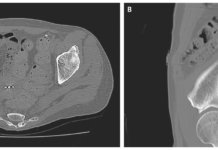
Given the concerning constellation of findings—unilateral otologic symptoms with facial nerve involvement—cross-sectional imaging was performed. Computed tomography (CT) of the head and neck revealed a mass in the nasopharynx, located in the postnasal space with extension toward the Eustachian tube region. The lesion was associated with obstruction of the left Eustachian tube, explaining the middle ear effusion and conductive hearing loss. The imaging findings raised strong suspicion for a malignant nasopharyngeal process.
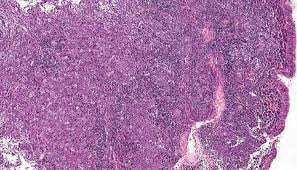
A biopsy of the nasopharyngeal mass was subsequently performed. Histopathological examination confirmed the diagnosis of nasopharyngeal carcinoma (NPC), an epithelial malignancy arising from the mucosal lining of the nasopharynx. The tumor was consistent with a non-keratinizing undifferentiated carcinoma, the most common histologic subtype associated with Epstein–Barr virus (EBV) infection.
Nasopharyngeal carcinoma is a distinct head and neck malignancy with a unique epidemiological distribution, being most prevalent in Southern China, Southeast Asia, North Africa, and certain Arctic populations. In non-endemic regions, it is relatively rare but often diagnosed at a more advanced stage due to nonspecific early symptoms. The disease is strongly associated with EBV infection, genetic susceptibility, and environmental factors such as consumption of nitrosamine-rich preserved foods.
The patient’s presenting symptoms can be explained by the anatomic location and local invasive nature of the tumor. Ear pain and hearing loss are commonly due to obstruction of the Eustachian tube, which leads to impaired middle ear ventilation and fluid accumulation. This results in conductive hearing loss and a sensation of ear fullness. The development of facial nerve palsy suggests local extension of the tumor into the skull base or involvement of adjacent cranial nerves, which is a sign of more advanced disease.
Nasopharyngeal carcinoma is particularly notable for its tendency to present with cranial neuropathies due to its proximity to the skull base foramina. In addition to the facial nerve (cranial nerve VII), other cranial nerves such as the trigeminal (V), abducens (VI), glossopharyngeal (IX), and vagus (X) nerves may also become involved in advanced disease, leading to a variety of neurological deficits.
The diagnostic evaluation of suspected nasopharyngeal carcinoma includes endoscopic examination of the nasopharynx, imaging with CT and magnetic resonance imaging (MRI) to assess local invasion, and biopsy for histological confirmation. MRI is particularly useful in evaluating soft tissue extension and skull base involvement. Serological testing for EBV DNA levels may also aid in diagnosis, staging, and monitoring response to treatment.
Staging of nasopharyngeal carcinoma is critical for guiding management and typically involves assessment for regional lymph node involvement and distant metastasis. The tumor frequently spreads early to cervical lymph nodes, and patients may present with painless neck masses as an initial symptom. Distant metastases, when present, commonly involve bone, lung, and liver.
Management of nasopharyngeal carcinoma is primarily based on radiotherapy, given the tumor’s radiosensitivity and anatomic inaccessibility for complete surgical resection. Concurrent chemoradiotherapy is the standard of care for locally advanced disease. Chemotherapy may include platinum-based regimens, and in selected cases, adjuvant or neoadjuvant therapy is used. Targeted therapies and immunotherapy are being explored in advanced or recurrent disease settings.
The prognosis of nasopharyngeal carcinoma depends on stage at diagnosis. Early-stage disease has a favorable outcome with appropriate treatment, while advanced disease involving cranial nerves or distant metastasis carries a poorer prognosis. The presence of cranial nerve palsy, as seen in this patient, is generally considered an indicator of advanced local disease.
This case illustrates the importance of recognizing subtle but significant clinical signs such as unilateral ear symptoms combined with cranial nerve deficits. While otologic symptoms are common and often benign, the coexistence of facial nerve palsy should prompt urgent evaluation for a central or structural cause, including nasopharyngeal carcinoma. Early imaging and biopsy are essential for diagnosis, as timely treatment can significantly improve outcomes.
In summary, a 34-year-old man presenting with unilateral ear pain, hearing loss, and facial droop was found on imaging to have a nasopharyngeal mass. Histopathology confirmed nasopharyngeal carcinoma. The case highlights the classic presentation of this malignancy and underscores the importance of early recognition of cranial neuropathies and unilateral otologic symptoms as potential signs of an underlying nasopharyngeal tumor.
Source: NEJM