
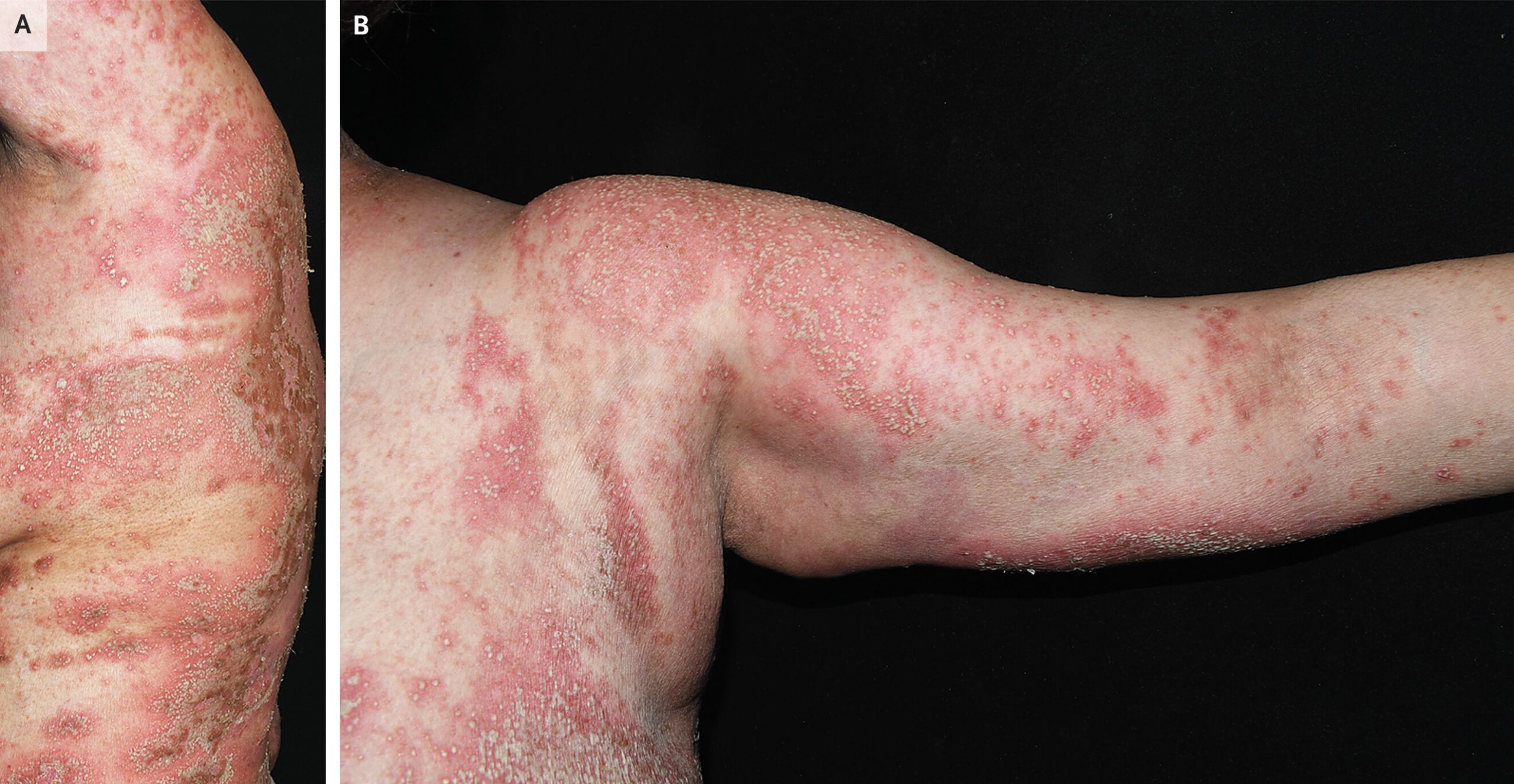
A 54-year-old woman with a known history of well-controlled chronic plaque psoriasis presented to the emergency department with a sudden 2-day history of fever and a rapidly worsening, painful skin eruption. On examination, she had widespread erythematous patches covered with numerous small pustules that were coalescing in areas, giving the skin a striking inflamed and “sterile pustular” appearance. The abrupt onset, systemic symptoms, and background of psoriasis immediately raised concern for a severe acute variant of psoriasis known as generalized pustular psoriasis (GPP).
Generalized pustular psoriasis is a rare but potentially life-threatening dermatologic emergency. Unlike chronic plaque psoriasis, which typically presents as well-demarcated, scaly plaques, GPP is characterized by sudden onset of widespread erythema and sterile pustules. These pustules are not caused by infection but rather by intense neutrophilic inflammation within the epidermis. The condition can develop in patients with a prior history of psoriasis or, less commonly, in individuals without any known psoriatic disease.
In this patient, the transition from stable chronic plaque psoriasis to an acute pustular eruption suggests a trigger-induced flare. Known triggers for GPP include abrupt withdrawal of systemic corticosteroids, infections, pregnancy, hypocalcemia, certain medications (such as lithium, beta-blockers, or antimalarials), and physiological stress. Even in patients whose psoriasis is otherwise well-controlled, these triggers can lead to a sudden and dramatic shift in immune activity.
The pathophysiology of generalized pustular psoriasis is distinct but related to that of plaque psoriasis. Both conditions involve dysregulation of the immune system, particularly overactivation of T-helper cells and increased production of pro-inflammatory cytokines such as tumor necrosis factor-alpha (TNF-α), interleukin-17 (IL-17), and interleukin-23 (IL-23). In GPP, there is an exaggerated neutrophilic response leading to accumulation of neutrophils in the epidermis, forming sterile pustules known histologically as spongiform pustules of Kogoj.
Systemically, GPP is far more severe than plaque psoriasis. Patients often present with fever, malaise, leukocytosis, and elevated inflammatory markers. The skin barrier dysfunction can be extensive, leading to fluid loss, electrolyte imbalance, and increased risk of secondary infection. In severe cases, complications such as sepsis, acute kidney injury, or cardiovascular instability may occur, making this a dermatologic emergency requiring hospital admission.
Clinically, the rash begins as diffuse erythema that rapidly spreads and becomes studded with superficial pustules. These pustules may coalesce to form “lakes of pus,” although the contents are sterile on culture. The skin is often tender and painful, distinguishing it from the more pruritic nature of plaque psoriasis. Over time, the pustules may resolve with desquamation, but relapses are common without appropriate treatment.
Diagnosis is primarily clinical but supported by laboratory and histopathologic findings. Blood tests often reveal leukocytosis and elevated acute-phase reactants such as C-reactive protein. Skin biopsy, if performed, shows subcorneal or intraepidermal collections of neutrophils with minimal spongiosis and psoriasiform epidermal hyperplasia. Importantly, cultures of pustular fluid are negative, helping to distinguish GPP from bacterial or fungal infections.
Differential diagnosis is broad and includes acute generalized exanthematous pustulosis (AGEP), bacterial sepsis with cutaneous involvement, subcorneal pustular dermatosis, and viral infections such as disseminated herpes simplex. AGEP, in particular, can closely resemble GPP clinically but is typically drug-induced, resolves more rapidly after withdrawal of the offending agent, and often shows eosinophils on histology.
Management of generalized pustular psoriasis requires urgent intervention. Patients are often admitted to hospital for close monitoring due to the risk of systemic complications. Supportive care includes fluid and electrolyte management, temperature control, and prevention of secondary infection. Identifying and removing any triggering factors is critical.
Systemic therapy is the mainstay of treatment. Traditionally, agents such as cyclosporine and acitretin have been used with good effect due to their rapid immunomodulatory action. More recently, biologic therapies targeting specific inflammatory pathways—particularly IL-17 and IL-23 inhibitors—have shown significant efficacy and are increasingly used in both acute and long-term management. In severe cases, TNF-α inhibitors may also be considered.
Prompt treatment often leads to rapid clinical improvement, with resolution of fever and reduction in pustule formation within days. However, recurrence is possible, and long-term dermatologic follow-up is essential. Patients with GPP may require ongoing maintenance therapy to prevent future flares and to manage underlying chronic psoriasis.
This case highlights an important principle in dermatology: even patients with previously stable chronic plaque psoriasis can experience sudden and severe systemic flares. The transition from localized plaques to widespread pustular disease represents a dramatic shift in immune activity and requires urgent recognition.
In summary, a 54-year-old woman with controlled chronic plaque psoriasis presenting with acute fever and widespread erythematous, pustular skin lesions is highly suggestive of generalized pustular psoriasis. This condition represents a severe, systemic variant of psoriasis that requires prompt diagnosis, hospital-based management, and targeted immunomodulatory therapy. Early recognition is essential to prevent complications and ensure favorable outcomes.
Source: NEJM