
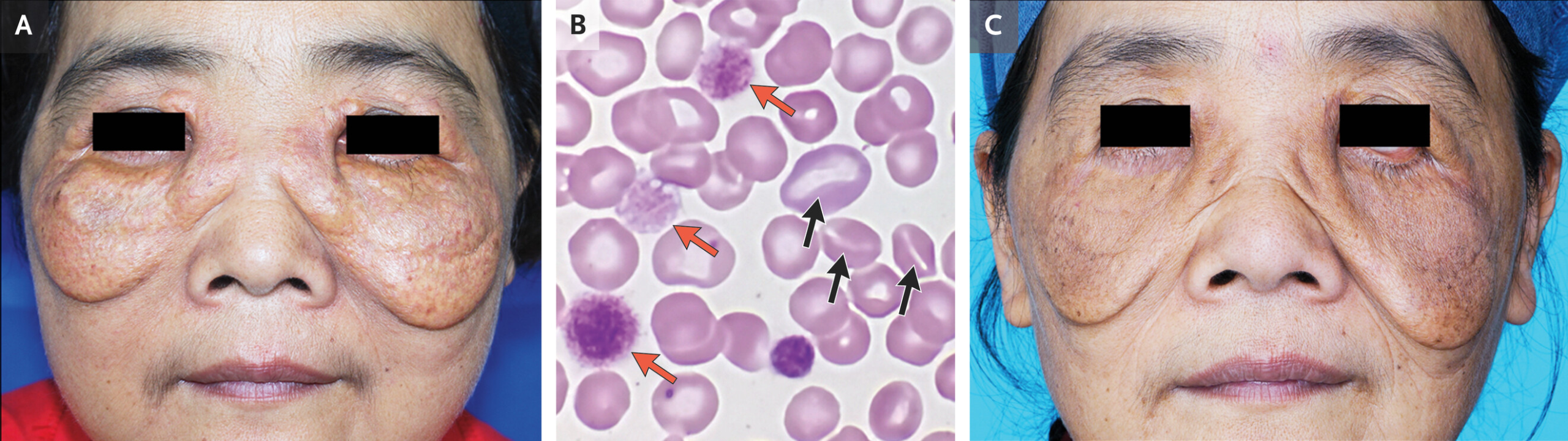
A 50-year-old woman presented with a 5-year history of gradually enlarging yellowish nodules beneath both eyes. The lesions had developed slowly over time and were initially considered a cosmetic concern. However, over the years they became more prominent and persistent. On further evaluation, laboratory studies revealed two important abnormalities: thrombocytopenia and markedly elevated levels of low-density lipoprotein (LDL) cholesterol. The combination of cutaneous findings and abnormal lipid profile raised suspicion for an underlying systemic lipid disorder.
The lesions described in this patient are consistent with xanthogranulomas, a type of xanthoma characterized by localized collections of lipid-laden macrophages in the skin. These lesions commonly appear as yellow-orange papules or nodules, often in periocular regions such as the eyelids or under the eyes. While xanthogranulomas can occur as isolated benign skin findings, their presence may also signal significant disturbances in lipid metabolism.
Xanthomas develop when excess lipids in the bloodstream are taken up by macrophages in the skin and connective tissue. These lipid-filled macrophages, known as foam cells, accumulate and form visible deposits. According to dermatology and lipid disorder references, including those from the American Academy of Dermatology and major endocrine literature, xanthomas are strongly associated with hyperlipidemia, particularly elevated LDL cholesterol levels.
In this case, the patient’s extremely high LDL cholesterol suggests a possible diagnosis of familial hypercholesterolemia (FH) or another severe lipid metabolism disorder. Familial hypercholesterolemia is an inherited condition characterized by impaired clearance of LDL cholesterol from the blood due to mutations affecting LDL receptors, apolipoprotein B, or PCSK9. As a result, cholesterol accumulates in the circulation from an early age, leading to premature atherosclerosis and cholesterol deposition in tissues.
Although FH is often associated with tendon xanthomas and early cardiovascular disease, cutaneous xanthomas around the eyes, known as xanthelasma, can also be a presenting feature. The periocular region is particularly prone to lipid deposition due to the thin dermis and rich vascular supply. Over time, these deposits may coalesce into larger plaques or nodules, as seen in this patient.
The presence of thrombocytopenia adds an additional layer of complexity to this case. Thrombocytopenia, or a low platelet count, is not a typical feature of isolated hyperlipidemia and suggests either a concurrent hematologic disorder, immune-mediated platelet destruction, or bone marrow involvement. In some cases, systemic lipid disorders or chronic inflammatory states can be associated with secondary hematologic abnormalities. Alternatively, an unrelated condition such as immune thrombocytopenic purpura (ITP) or bone marrow suppression must also be considered and investigated.
From a clinical perspective, the coexistence of xanthogranulomas and severe hypercholesterolemia is significant because it reflects not only a dermatologic manifestation but also a major cardiovascular risk factor. Elevated LDL cholesterol is one of the most important modifiable risks for atherosclerotic cardiovascular disease. Patients with long-standing untreated hyperlipidemia are at increased risk of coronary artery disease, stroke, and peripheral vascular disease. The presence of visible xanthomas often indicates long-standing and severe lipid elevation.
Diagnosis in such cases involves a combination of clinical examination and laboratory testing. A detailed lipid profile confirms the severity of dyslipidemia. Additional tests may include liver function studies, thyroid function tests, and screening for secondary causes of hyperlipidemia such as diabetes mellitus or nephrotic syndrome. Genetic testing may be considered if familial hypercholesterolemia is suspected, especially if there is a family history of early cardiovascular disease or elevated cholesterol.
Management of this condition requires a dual approach: treatment of the lipid disorder and assessment of the skin lesions. From a dermatologic standpoint, xanthogranulomas are benign and do not require treatment unless for cosmetic reasons. However, addressing the underlying hyperlipidemia is essential. High-intensity statin therapy is typically the first-line treatment, often combined with other lipid-lowering agents such as ezetimibe or PCSK9 inhibitors in severe cases. Lifestyle modifications, including dietary changes, weight management, and exercise, are also important components of therapy.
Thrombocytopenia must be evaluated separately to determine its cause. A peripheral blood smear, repeat complete blood count, and possibly bone marrow studies may be required. Treatment depends on the underlying mechanism and may range from observation to immunosuppressive therapy if an autoimmune process is identified.
This case highlights the important relationship between dermatologic findings and systemic disease. Skin manifestations such as xanthomas often serve as visible markers of underlying metabolic abnormalities. In many cases, they provide an early clue to conditions that carry significant long-term health risks, particularly cardiovascular disease.
In summary, the presence of periocular xanthogranulomas in this 50-year-old woman, combined with severe LDL elevation and thrombocytopenia, suggests a systemic lipid disorder with possible additional hematologic involvement. While the skin lesions themselves are benign, they serve as an important warning sign of underlying metabolic dysfunction. Early recognition and aggressive management of hyperlipidemia are essential to reduce the risk of serious cardiovascular complications and improve long-term outcomes.
Source: NEJM