
Case of congenital spinal meningocele in a neonate
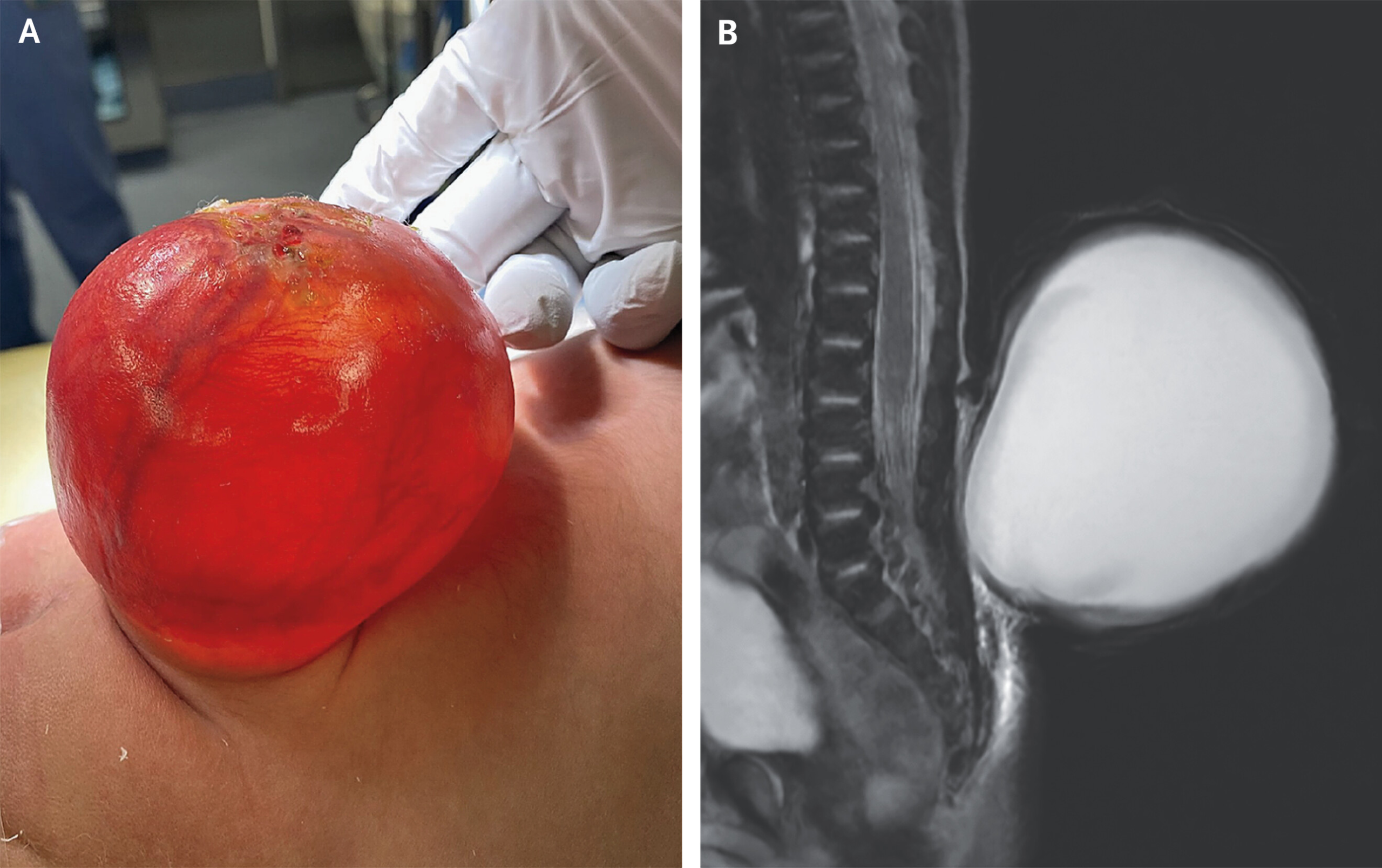
A newborn boy was admitted to the neonatal intensive care unit shortly after birth for urgent evaluation and management of an open neural tube defect. On physical examination, clinicians noted a large, red, fluid-filled sac protruding from a defect in the lumbosacral region of the spine. The lesion was covered by thin membranes and contained neural tissue and cerebrospinal fluid. The appearance was most consistent with myelomeningocele, the most severe form of spina bifida.
Neural tube defects are congenital malformations that occur when the embryologic neural tube fails to close properly during early fetal development. This closure normally takes place within the first four weeks of gestation, often before pregnancy is recognized. Failure of closure at any point along the developing neural axis can result in a spectrum of abnormalities, ranging from mild, asymptomatic defects such as spina bifida occulta to severe open lesions such as myelomeningocele. According to the Centers for Disease Control and Prevention and the World Health Organization, neural tube defects remain among the most significant causes of congenital neurologic disability worldwide, despite being largely preventable in many cases.
Myelomeningocele occurs when both the meninges and spinal cord herniate through a defect in the vertebral arches and overlying skin
The lumbosacral region is most commonly affected because it is one of the last areas of the neural tube to close during embryogenesis. In this condition, the exposed neural tissue is vulnerable to trauma, infection, and ongoing neurological injury. The red, fluid-filled sac observed in this newborn represents this exposed neural placode covered by a thin membrane, through which cerebrospinal fluid may leak.
The condition arises from a multifactorial interaction of genetic susceptibility and environmental influences. One of the most well-established risk factors is maternal folic acid deficiency during the periconceptional period. Numerous large population studies and recommendations from organizations such as the U.S. Preventive Services Task Force and the American College of Obstetricians and Gynecologists have demonstrated that adequate folic acid supplementation can reduce the risk of neural tube defects by up to 70 percent. Other risk factors include maternal diabetes, obesity, use of certain antiepileptic medications such as valproate, and a family history of neural tube defects. However, in many cases, no single cause is identified.
Clinically, infants with myelomeningocele present with an obvious open spinal defect at birth. The lesion may vary in size, but it typically contains neural tissue, meninges, and cerebrospinal fluid. Neurological deficits depend on the level and severity of the lesion and may include lower limb weakness or paralysis, reduced or absent sensation below the level of the defect, and absent reflexes. Because the nerves controlling bladder and bowel function often originate in the affected spinal segments, many infants also develop neurogenic bladder and bowel dysfunction. In addition, a significant proportion of affected infants have associated central nervous system abnormalities, most commonly Chiari II malformation, which involves downward displacement of cerebellar and brainstem structures and may lead to hydrocephalus.
The presence of an open neural tube defect constitutes a medical emergency due to the risk of infection, cerebrospinal fluid leakage, and progressive neurological damage. Immediately after birth, careful protective measures are taken to minimize complications. The lesion is covered with sterile, moist dressings to prevent desiccation and contamination, and the infant is positioned prone to avoid pressure on the exposed sac. Broad-spectrum antibiotics may be initiated if there is concern for infection or as prophylaxis in some settings. Neurological status is closely monitored, and imaging studies such as cranial ultrasound or magnetic resonance imaging are often performed to evaluate for associated brain abnormalities, particularly hydrocephalus.
Definitive treatment involves early surgical closure of the defect, typically within the first 24 to 48 hours of life
The primary goals of surgery are to reposition neural tissue into the spinal canal, close the dura and overlying tissues, and reduce the risk of infection while preserving remaining neurological function. Early closure has been shown in pediatric neurosurgical literature, including guidelines from the American Association of Neurological Surgeons, to improve outcomes and reduce complications such as meningitis. In selected cases, prenatal surgical repair performed in utero has also been shown to improve motor outcomes and reduce the need for cerebrospinal fluid shunting, although it is only available in specialized centers and carries maternal and fetal risks.
Long-term outcomes for infants with myelomeningocele vary widely depending on the level of the lesion and associated complications. Higher spinal lesions are generally associated with more significant motor impairment. Many children require ongoing multidisciplinary care involving neurosurgery, urology, orthopedics, physical therapy, and rehabilitation medicine. Management of bladder dysfunction is often necessary to prevent recurrent urinary tract infections and preserve renal function. If hydrocephalus develops, surgical placement of a ventriculoperitoneal shunt may be required. With appropriate medical and surgical care, many individuals with myelomeningocele survive into adulthood, although they may face lifelong physical challenges.
Prevention remains a critical aspect of reducing the burden of neural tube defects. Public health authorities such as the CDC and WHO strongly recommend folic acid supplementation for women of reproductive age, ideally beginning before conception and continuing through early pregnancy. This simple intervention has significantly reduced the incidence of neural tube defects in many countries where food fortification and supplementation programs are widely implemented.
This case of a newborn with a lumbosacral myelomeningocele highlights both the severity of open neural tube defects and the importance of early recognition and management. It underscores the vulnerability of exposed neural tissue in the neonatal period and the urgent need for protective and surgical intervention. At the same time, it reflects a broader public health success story, where preventive strategies such as folic acid supplementation have made a measurable impact on reducing the occurrence of such devastating congenital anomalies.
Source: NEJM