
Scientists have captured detailed images of HIV-1 viral cores as they enter the nucleus of human cells, providing a major breakthrough in understanding how the virus infects the body. The study, led by researchers at the University of Oxford and Diamond Light Source in the UK, used advanced cryo-electron microscopy to observe this critical stage of HIV infection in unprecedented detail.
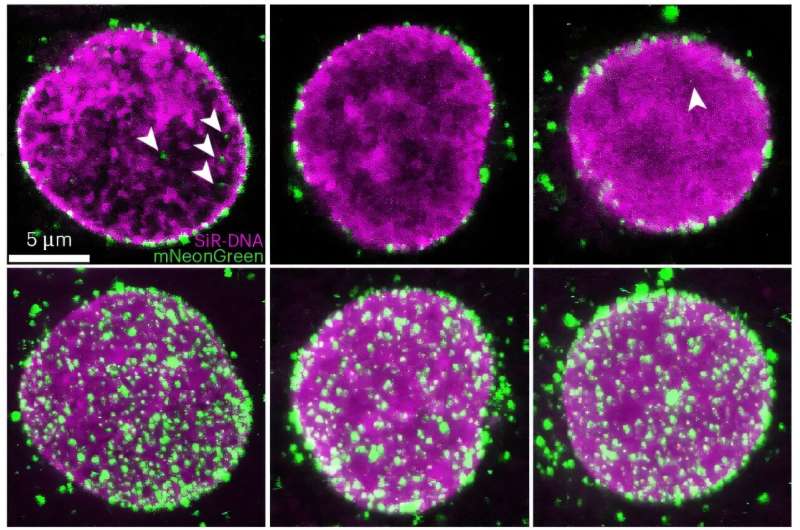
HIV-1 infects immune cells by delivering its genetic material into the nucleus, where it can merge with the host’s DNA and begin replicating. For years, scientists struggled to understand exactly how the virus crossed the nuclear barrier because the process happens very quickly and is difficult to observe. Using specialized imaging techniques and partially permeabilized cells, the research team successfully visualized nearly 1,500 viral cores during nuclear entry.
The findings revealed that HIV’s success depends heavily on the flexibility and shape of its capsid, the protective shell surrounding the viral genome. Researchers also discovered that the nuclear pore complex, once believed to be rigid, is actually highly adaptable and capable of expanding to allow viral material to pass through. Another important factor was a host protein called CPSF6, which helps guide HIV into the nucleus. Viral cores that lacked proper interaction with CPSF6 or were structurally unstable often failed to enter the nucleus successfully.
Scientists say the discovery changes current understanding of HIV infection by showing that the nuclear pore actively influences which viral particles can enter the nucleus instead of acting as a passive gateway. The research may help scientists design future antiviral treatments that block HIV during this vulnerable stage of infection. Beyond HIV, the study also demonstrates how modern structural biology tools can reveal hidden details of complex cellular processes and improve understanding of other viruses.